24X48 Polished Porcelain Tile
24X48 Polished Porcelain Tile
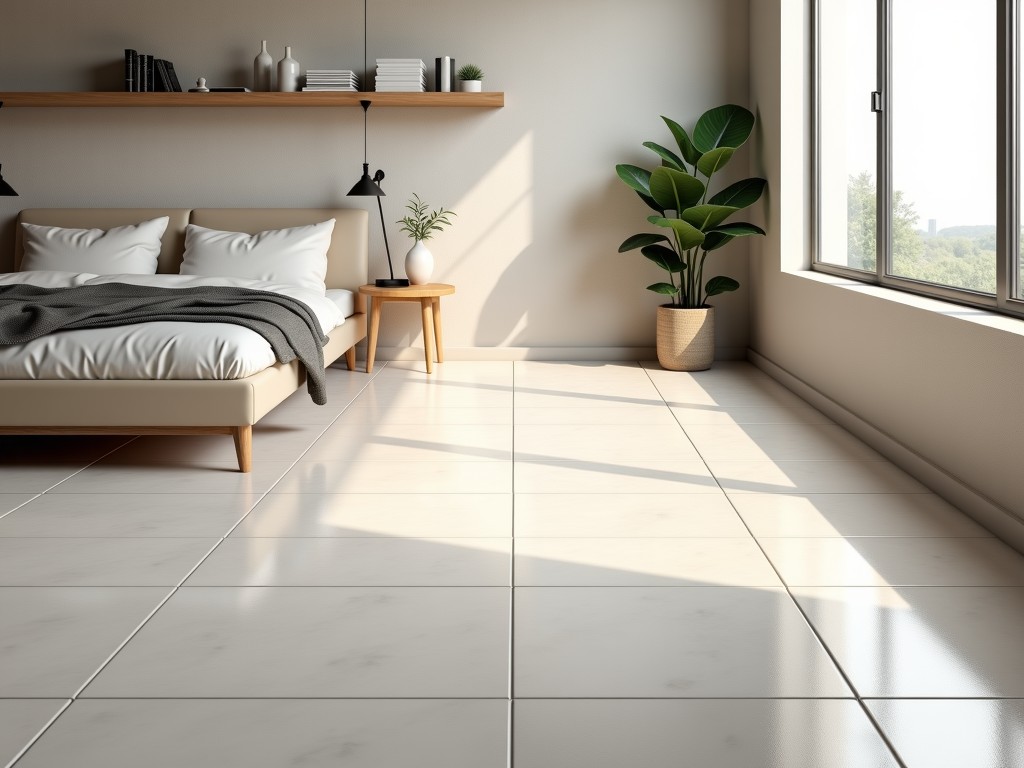
24x48 Polished Porcelain Tile: Technical Specifications and Industrial Applications
The 24x48 inch-format porcelain tile represents a high-performance solution for high-traffic commercial and residential architectural projects. Unlike standard ceramic alternatives, these tiles are manufactured through high-pressure pressing and extreme-temperature sintering, resulting in a dense vitrified body with minimal water absorption and superior mechanical strength.
Engineering Integrity and Material Composition
Selecting a large-format 24x48 porcelain tile requires understanding the dimensional stability and surface density. The large format minimizes the number of grout lines, which significantly reduces potential points for moisture ingress and biological growth in demanding environments. The material is typically composed of a refined blend of clay, feldspar, and silica, fired in kilns at temperatures exceeding 1,200°C.
The polishing process is achieved through precision mechanical grinding of the surface layer to expose the internal mineral structure, creating a high-reflectivity finish. This is not a surface coating but a structural-level treatment, ensuring that the aesthetic remains consistent even under minor surface abrasion. For procurement teams, this translates to a longer lifecycle and lower maintenance overhead compared to painted surfaces.
Technical Performance Matrix
| Parameter | Typical Specification Value |
|---|---|
| Water Absorption Rate | < 0.5% (Vitrified) |
| Modulus of Rupture | 35 - 45 N/mm² |
| PEI Abr Rating | Class IV - V (Heavy Commercial Traffic) |
| Dimensional Tolerance | ± 0.5mm - ± 1.0mm |
| Thickness Variation | 8mm - 10mm standard |
Installation Considerations for Large Format Tiles
The installation of 24x48 tiles requires rigorous substrate preparation. Because of the large surface area, any minor irregularity in the sub-floor can lead to "lippage" (uneven edges). Engineers must specify a flat substrate within a tolerance of 3mm over a 3-meter radius to ensure a flush finish.
We recommend using thin-set mortars with high-polymer content to ensure 100% coverage of the tile back. This prevents air pockets that could lead to tile cracking under mechanical loads or thermal expansion. In commercial environments, utilizing a leveling system is mandatory to maintain the geometric precision across the wide-format span.
Primary Application Scenarios
- Hospitality & Lobbies: High-resistance surfaces that withstand heavy foot traffic and chemical-grade industrial cleaning agents.
- Retail Environments: Aesthetic continuity with minimal grout lines, creating an expansive visual field while simplifying floor maintenance.
- Luxury Residential: Moisture-resistant flooring for kitchens and open living areas where thermal stability is critical.
Quality Assurance and Logistics
To ensure integrity during international transit, 24x48 porcelain tiles are reinforced with heat-treated wooden pallets and edge-protected polyethylene wrapping. Each batch undergoes rigorous testing for shade consistency (color tone de-variation), caliper dimensional accuracy, and flatness.
For large-scale projects, we provide detailed technical documentation to support engineering specifications. Discuss your project requirements with our team.
Frequently Asked Questions
Are 24x48 polished tiles suitable for outdoor use?
While porcelain is frost-resistant, a polished finish has a low coefficient of friction (slip resistance). For wet outdoor applications, a matte or textured finish is technically recommended to meet safety standards.
What is the load-bearing capacity of these tiles?
The tile itself has high compressive strength, but the system capacity depends on the substrate and mortar bond. Proper installation is critical to prevent failure under point loads.