3 Dimensional Porcelain Wall Tiles
3 Dimensional Porcelain Wall Tiles
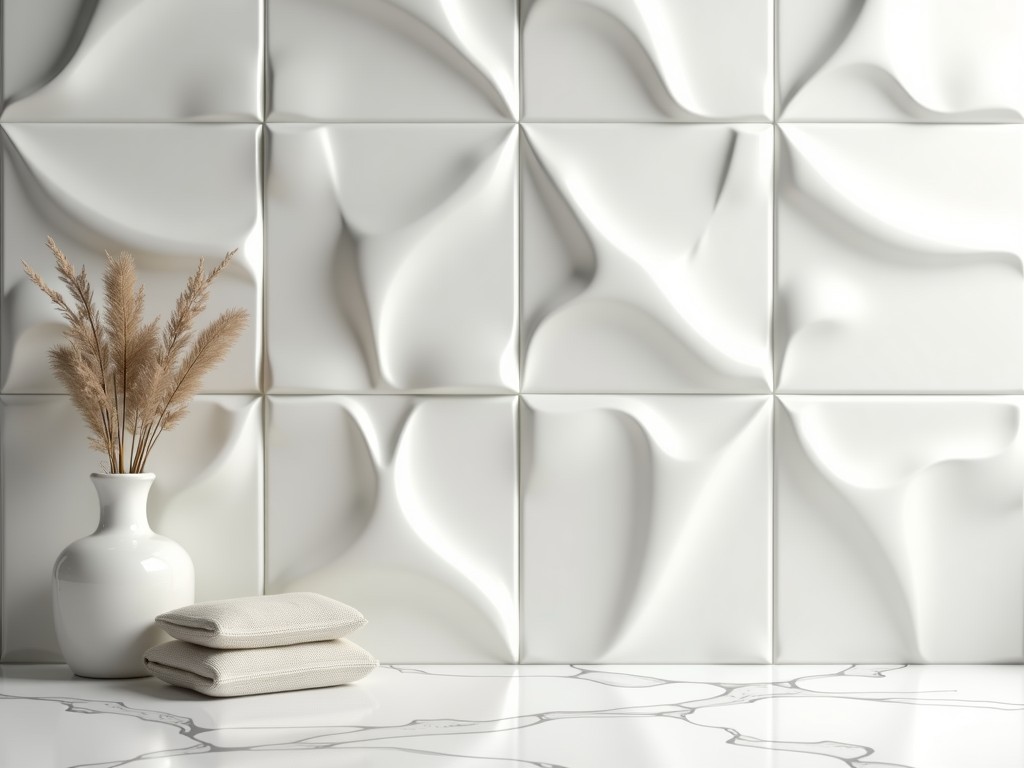
3-Dimensional Porcelain Wall Tiles: Engineering Specifications and Architectural Integration
Three-dimensional porcelain wall tiles represent a shift from decorative surface cladding to functional architectural elements. Unlike standard flat-format tiles, these units utilize precision extrusion and high-pressure molding to create complex relief patterns that manipulate light refraction and shadow. Designed for high-traffic commercial environments, industrial lobbies, and high-end hospitality projects, these tiles provide a durable solution where aesthetic complexity meets rigorous mechanical performance requirements.
The manufacturing process involves a high-density clay body that is fired at temperatures exceeding 1200°C. This results in a near-zero porosity material, ensuring that the intricate 3D geometries remain dimensionally stable under thermal expansion or moisture-induced stress.
Material Composition and Structural Integrity
The structural performance of 3D porcelain tiles depends on the mineralogical composition of the body. We typically utilize a blend of kaolin, feldspar, and quartz to achieve a high vitrification rate. This process is critical for 3D forms, as the sharp edges and varying thicknesses are prone to chipping or warping during the cooling cycle if the material shrinkage is not uniform.
- Low Water Absorption: Generally <0.5%, preventing frost-thaw damage in exterior architectural applications.
- Surface Hardness: Rated on the PEI scale or equivalent, ensuring the relief patterns resist abrasion from mechanical cleaning and contact.
- Flexural Strength: High modulus of rupture allows for thinner profile-relief designs without compromising structural safety.
Technical Specification Overview
| Parameter | Standard Specification Range |
|---|---|
| Material Type | Full-body Pressed Porcelain |
| Thickness Options | 6mm to 20mm (Customizable per relief depth) |
| Dimensional Tolerance | ±0.5% for length/width; ±1mm thickness |
| Chemical Resistance | Class A1 (Acid/Alkaline resistant) |
| Slip Resistance | R9 to R11 (depending on surface finish) |
Architectural Application and Acoustic Properties
In industrial and commercial design, 3D tiles are often selected for their acoustic benefits. The irregular surfaces act as sound diffusers, breaking up standing waves in large open-plan spaces like transit hubs or corporate lobbies. This reduces reverberation time without the need for traditional acoustic foam panels.
Beyond acoustics, these tiles are used to mask structural imperfections in wall substrates. By utilizing deep relief patterns, architects can hide minor irregularities in the underlying masonry, allowing for a seamless visual finish across large-scale installations.
Installation Considerations for Engineers
Installing 3D porcelain units requires specialized adhesive protocols. Due to the weight distribution and the geometry of the tiles, standard thin-set methods may be insufficient.
- Back-buttering: To ensure 100% coverage and prevent air voids that could cause structural failure.
- Grout Line Management: Precision-matched spacers are required to maintain the alignment of the 3D pattern.
- Substrate Load: Ensure the wall can support the increased dead load of heavy-format porcelain-relief tiles.
Quality Control and Inspection Protocols
Our quality assurance involves rigorous testing to ensure geometric consistency across production batches. We utilize laser scanning to verify that the 3D profile matches the CAD specifications within the defined tolerances. This prevents visual "stepping" where multiple tiles meet on a wall surface.
Each batch undergoes thermal shock testing to ensure that the glaze and porcelain body can withstand rapid temperature changes without delamination or cracking, a vital factor for projects in varying climates.
Request a Technical Specification Sheet
Contact our engineering team for CAD files, material data sheets, and custom molding inquiries for your project.
Inquire About Project Requirements