Bathroom Marble Mosaic Wall Tiles B2B Buy
Bathroom Marble Mosaic Wall Tiles B2B Buy
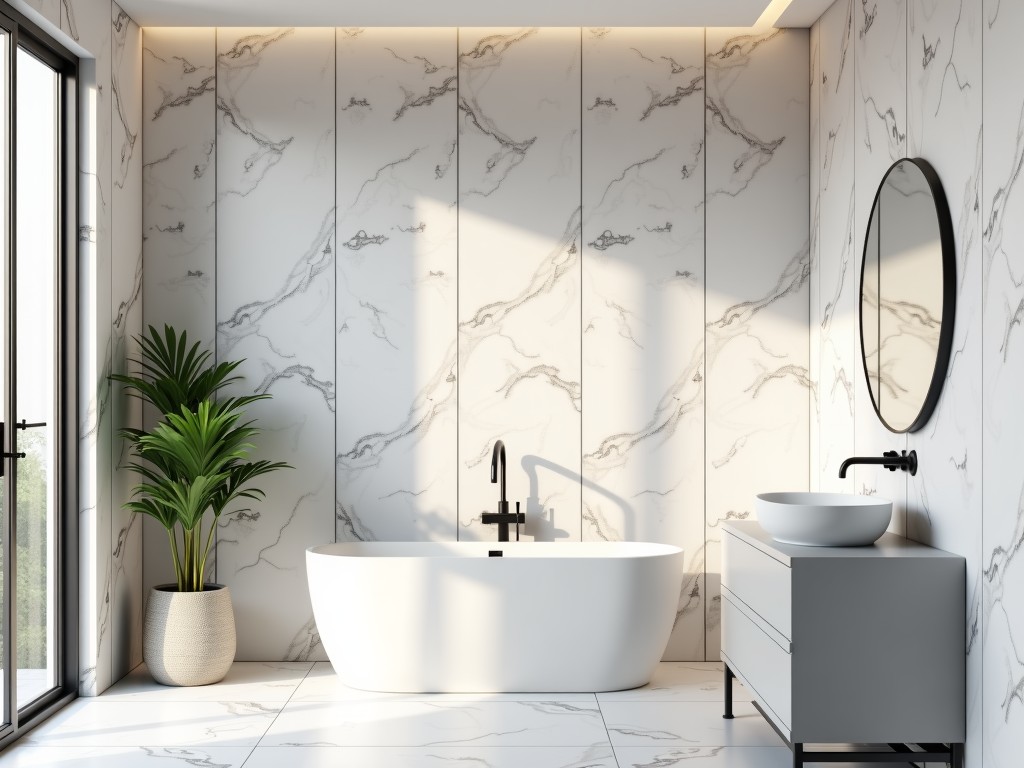
Technical Evaluation of Marble Mosaic Wall Tiles for Commercial and Residential Applications
Selecting marble mosaic tiles for high-moisture environments requires a balance between aesthetic intent and rigorous structural performance standards. Unlike large-format slabs, natural marble mosaics are composed of smaller units mounted on mesh backings, offering superior flexibility on complex architectural geometries. For procurement managers and design engineers, the focus lies on the stone's porosity, water absorption rates, and the chemical stability of the material to ensure long-term durability in bathroom and spa environments.
Material Selection and Porosity Analysis
The performance of a marble mosaic is dictated by the geological origin of the stone. High-density varieties like Carrara, Crema Marfil, and Travertine offer different resistance to mechanical wear compared to softer, more porous stones. In a bathroom setting, the primary technical challenge is capillary action—where water penetrates the stone's pore structure, potentially leading to staining or structural degradation if not properly sealed.
- Stone Density: Higher density results in better resistance to chemical etching from cleaning agents.
- Water Absorption Rate: Commercial-grade marble typically undergoes a vacuum-impregnation process to fill voids and reduce moisture ingress.
- Surface Finish: Hononed finishes provide higher slip resistance (R values) compared to polished surfaces, critical for wet zones.
Technical Specifications and Engineering Standards
Engineers must specify dimensional tolerances to ensure uniform grout lines across the installation. Variations in tile thickness across a mosaic sheet can lead to "lippage" or uneven surfaces, which compromises the structural integrity of the wall finish.
| Parameter | Typical Range / Specification | Testing Method |
|---|---|---|
| Unit Size | 25x25mm, 50x50mm, 100x10mm | Customizable per project |
| Thickness Tolerance | ±0.5mm to ±1.0mm | ISO 1300-3 |
| Water Absorption | < 0.5% (High density) | ISO 1054-5 |
| Backing Material | Fiberglass Mesh / Reinforced Paper | Adhesion Test |
| Bending Strength | >30 MPa | ASTM C664 |
Manufacturing and Quality Control
The production process begins with the selection of raw natural stone blocks, ensuring color consistency across batches. CNC water-jet cutting is utilized to achieve precision dimensions, minimizing waste and ensuring uniform edge profiles. A critical stage is the mesh mounting process, where high-tensile adhesives are applied to ensure the tiles do not delaminate during transport or thermal expansion/contraction cycles.
Our quality control protocols include visual inspection for natural fissures, cracks, and color variations that exceed project tolerances. For large-scale commercial developments, we provide batch-matching analysis to ensure the geological characteristics of the marble remain uniform across multiple architectural zones.
Application Scenarios in Architecture
Marble mosaics are uniquely suited for environments where traditional large-format tiles fail. Their modular nature allows them to conform to curved walls, cylindrical showers, and intricate feature niches without requiring complex manual cuts.
- Luxury Hospitality: High-traffic hotel bathrooms and spa facilities where aesthetic longevity is paramount.
- Commercial Retail: Feature walls in premium retail areas requiring a durable yet high-end surface finish.
- Residential Premium: Custom accent walls in master suites, utilizing natural stone textures for warmth.
Installation and Maintenance Protocols
To ensure the longevity of marble mosaics, the substrate must be perfectly flat and rigid. Using a thin-set mortar modified for natural stone is recommended to prevent chemical reactions. Furthermore, because marble is naturally porous, the application of a professional-grade penetrating sealer immediately after installation is mandatory to prevent staining and mineral deposit buildup.
Maintenance involves pH-neutral cleaners. Acidic or highly alkaline cleaners can permanently etch the calcium carbonate surface of the marble, destroying the finish and increasing porosity over time.
Technical Support & Procurement
Are you seeking specific technical specifications for a large-scale architectural project? Our engineering team can provide detailed data sheets, material compatibility reports, and custom sizing solutions.
Discuss Project Requirements with Our Engineering Team