China Living Room Tiles
China Living Room Tiles
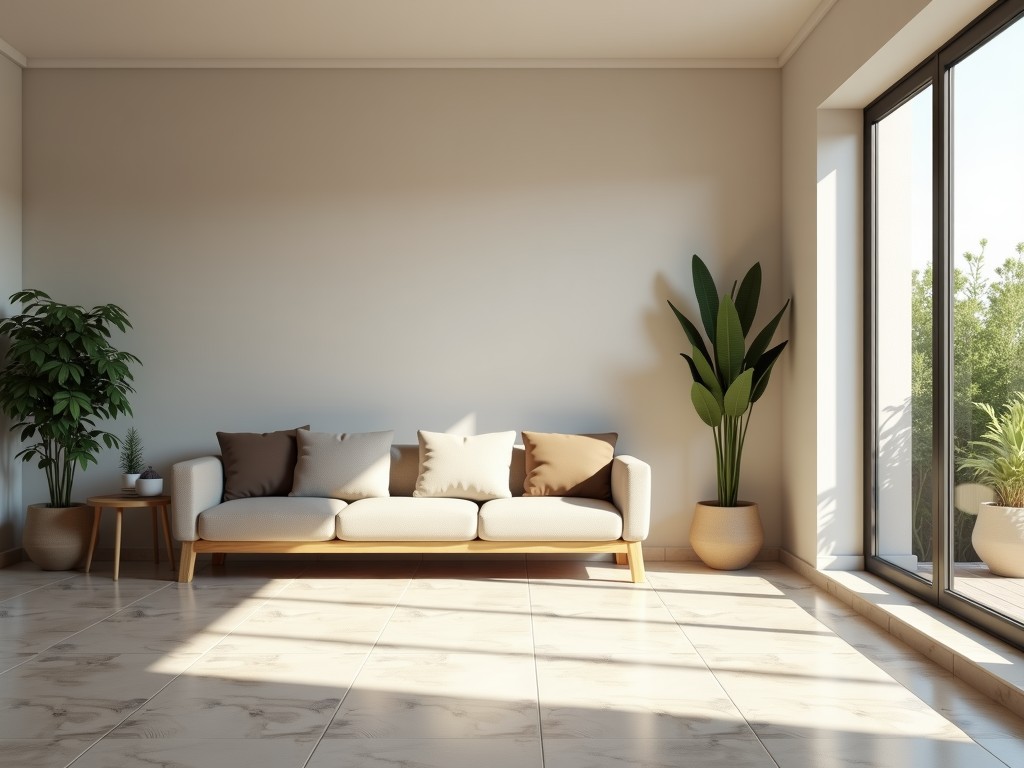
High-Performance Flooring Solutions for Residential and Commercial Living Spaces
Selecting appropriate flooring for living areas requires a technical balance between aesthetic requirements, mechanical durability, and long-term maintenance. Unlike industrial-grade surfaces, living room tiles must withstand varying foot traffic patterns, thermal fluctuations, and frequent chemical cleaning while maintaining structural integrity and finish. Our selection focuses on high-density porcelain and vitrified materials, engineered to ensure dimensional stability and resistance to wear over decade-year cycles.
Material Selection and Structural Integrity
The performance of a living room tile is dictated by its mineral composition and the firing process. We prioritize full-body porcelain, which is sintered at temperatures exceeding 1200°C. This thermal process results in a vitrified material with a water absorption rate typically below 0.5%. Such low porosity is critical for preventing moisture-related expansion and ensuring that the tile remains inert in indoor environments with fluctuating humidity levels.
From an engineering perspective, the Mohs hardness of the surface determines its resistance to abrasion and scratching. High-traffic residential zones benefit from tiles with a higher PE rating (PE IV or V), ensuring the surface glaze does not degrade under abrasive debris movement. Additionally, the coefficient of friction (COF) is evaluated to ensure safety standards are met without compromising the tactile quality of the living space.
Technical Specifications and Performance Metrics
| Property | Typical Value / Range | Application Benefit |
|---|---|---|
| Water Absorption | < 0.5% | Stain resistance and dimensional stability. |
| Modulus of Rupture Strength | 35 - 45 MPa | Load-bearing capacity for heavy furniture. |
| Abrasion Resistance (PEI) | Class III - V | Longevity in high-traffic zones. |
| Dimensional Tolerance | ± 0.1mm | Allows narrow grout lines for seamless finish. |
| Slip Resistance | R9 - R11 (depending on finish) | Safety in open-plan layouts. |
Manufacturing and Surface Engineering
The manufacturing process for our living room tiles utilizes rectified edges. This mechanical process grinds the tile edges to precise square angles, allowing installers to achieve a modern aesthetic with minimal grout joints (often as small as 2mm). This reduces the visual break and areas where dirt can accumulate, which simplifies the maintenance protocol.
Digital Inkjet Printing: Utilizes high-definition technology to replicate natural stone or wood textures with high color accuracy.
Polished Glaze: Provides a high-gloss surface that reflects light, enhancing smaller rooms by increasing visual depth.
Matte/Satin Finishes: Engineered for light diffusion, reducing glare and ideal for areas with high natural light.
Lappato Surfaces: Offers a subtle texture that provides better grip while maintaining a reflective quality.
Installation and Procurement Considerations
To ensure the longevity of the flooring system, the substrate preparation must be rigorous. The subfloor must be flat (within a tolerance of 3mm over 3 meters) to prevent hollow spots or cracking. We recommend using thin-set mortars specifically formulated for porcelain to ensure a strong chemical bond, accounting for the natural expansion and contraction of the material.
For large-scale residential projects or commercial developments, we provide batch-tracking to ensure color consistency across the entire order. Natural variations in expected are expected, but our quality control system tracks shade variations within defined tolerances to minimize visual discrepancies during installation.
Frequently Asked Questions
Are these tiles suitable for underfloor heating?
Yes, the high-density porcelain tiles have excellent thermal conductivity, making them ideal for radiant heating systems. They distribute heat evenly and contribute to energy efficiency.
What is the standard lead time for bulk orders?
Lead times vary based on production volume and current inventory. For standard specifications, we typically require 4-6 weeks from order confirmation to dispatch.
Can custom dimensions be manufactured?/
We offer custom sizing and specialized finishes for specific architectural requirements, subject to minimum order quantities and technical feasibility reviews.
Need to discuss technical specifications for your next project?
Request Technical Data Sheets & Quotation