China Project Marble Tiles
China Project Marble Tiles
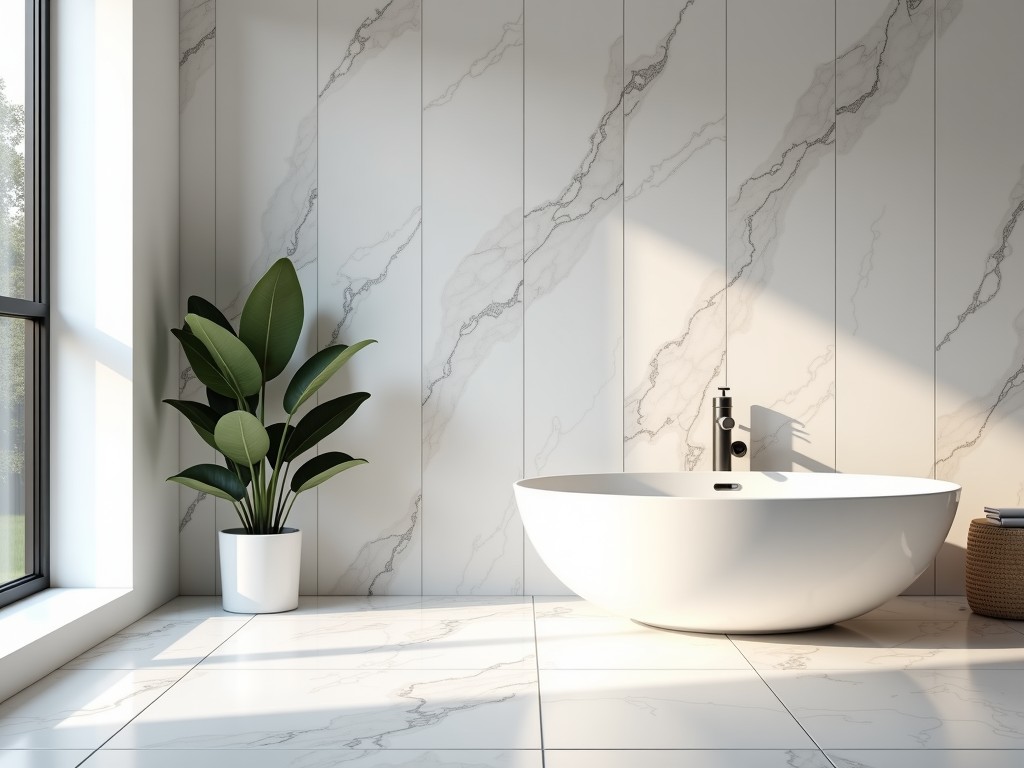
Project Marble Tiles: Engineering Specifications and Material Selection for Architectural Applications
Selecting project marble tiles for large-scale commercial installations requires a technical understanding of mineralogical properties, porosity, and structural load-bearing capacities. Unlike standardized ceramic alternatives, natural marble is a metamorphic rock whose performance is dictated by its chemical composition—primarily calcium carbonate—and density. For engineers and procurement teams, the focus shifts from aesthetic appeal to the material's resistance to mechanical abrasion, chemical etching, and dimensional stability in high-traffic environments or exposed structural planes.
Material Composition and Performance Variables
The durability of project marble is determined by the specific quarry origin and geological process. High-density varieties, such as those with tight crystalline structures, offer lower absorption rates and higher compressive strength compared to softer, porous variants. In industrial-grade specifications, the water absorption coefficient is a critical metric; higher absorption increases the risk of freeze-thaw damage and deep staining from organic compounds.
Compressive Strength: Measured in MPa, determining the tile's suitability for heavy foot traffic or vehicular loads.
Mohs Hardness: Evaluates resistance to surface scratching from abrasive particulates or grit.
Porosity Rate: Affects the effectiveness of penetrating sealants and resistance to chemical ingress.
Thermal Expansion: Crucial for calculating expansion joints in exterior facades or areas with significant temperature fluctuations.
Technical Specifications and Dimensional Tolerances
To ensure seamless installation in modern architectural projects, project marble must adhere to strict dimensional tolerances. Precision CNC-jet cutting allows for rectified edges, ensuring uniform thickness, which minimizes the required width of grout lines and improves the structural integrity of the finished plane across the substrate.
| Parameter | Standard Range | Industrial Application Note |
|---|---|---|
| Thickness | 6mm to 30mm+ | Wall cladding vs. heavy-duty flooring |
| Thickness Tolerance | ±0.3mm - ±0.5mm | Critical for rectified edge alignment |
| Flatness (Curvature) | ±0.5mm over 2m | Prevents lippage in high-safety zones |
| Water Absorption | < 0.5% (High Density) | Indicates frost and stain resistance |
| Friction Coefficient | R9 to R11 (on finish) | Determines slip resistance in wet areas |
Manufacturing and Surface Processing
The production of project marble tiles involves primary extraction in blocks, followed by mechanical slicing. The final surface finish is not merely aesthetic; it alters the mechanical performance of the tile. A honed finish provides a matte surface that slightly increases slip resistance compared to a high-polish finish, which enhances the crystalline luster but may be more susceptible to surface micro-scratching.
For project-specific requirements, we utilize CNC processing to achieve custom geometries, including mitered edges, chamfered profiles, and inlay patterns. This ensures that the marble can be integrated into complex architectural designs without compromising material integrity or requiring on-site structural modifications.
Application-Specific Considerations
Engineers must evaluate the environment where the marble will reside. Marble is chemically reactive to acids; therefore, in commercial kitchens or areas where acidic cleaners are used, specialized industrial-grade impregnants are mandatory to prevent etching and surface degradation.
Interior High-Traffic Zones
Ideal for lobbies, corporate halls, and retail corridors. Focus on high-density varieties with abrasion resistance to maintain surface integrity over decades.
Exterior Facade Systems
Requires marble with low thermal expansion and proper expansion joint planning to prevent spalling due to thermal stress.
Logistics and Quality Assurance
To prevent structural fractures during transit, project marble tiles require specialized packaging. This includes palletization on heat-treated wooden crates with internal foam buffering to mitigate edge chipping and impact breakage. Each batch undergoes visual inspection for natural veining consistency and technical defect scanning, ensuring that the material delivered to the site-manager meets the project's engineering requirements.
For large-scale procurement, we provide detailed data sheets including mineral analysis reports and test results upon request. This transparency allows project managers to verify the material against specific building codes and safety standards before installation.
Technical Consultation for Your Project
Discuss your architectural specifications, material requirements, and volume needs with our engineering team.
Request Technical Specifications & Quotation