Decorative Wall Tiles for Industrial and Commercial Wholesale
Decorative Wall Tiles for Industrial and Commercial Wholesale
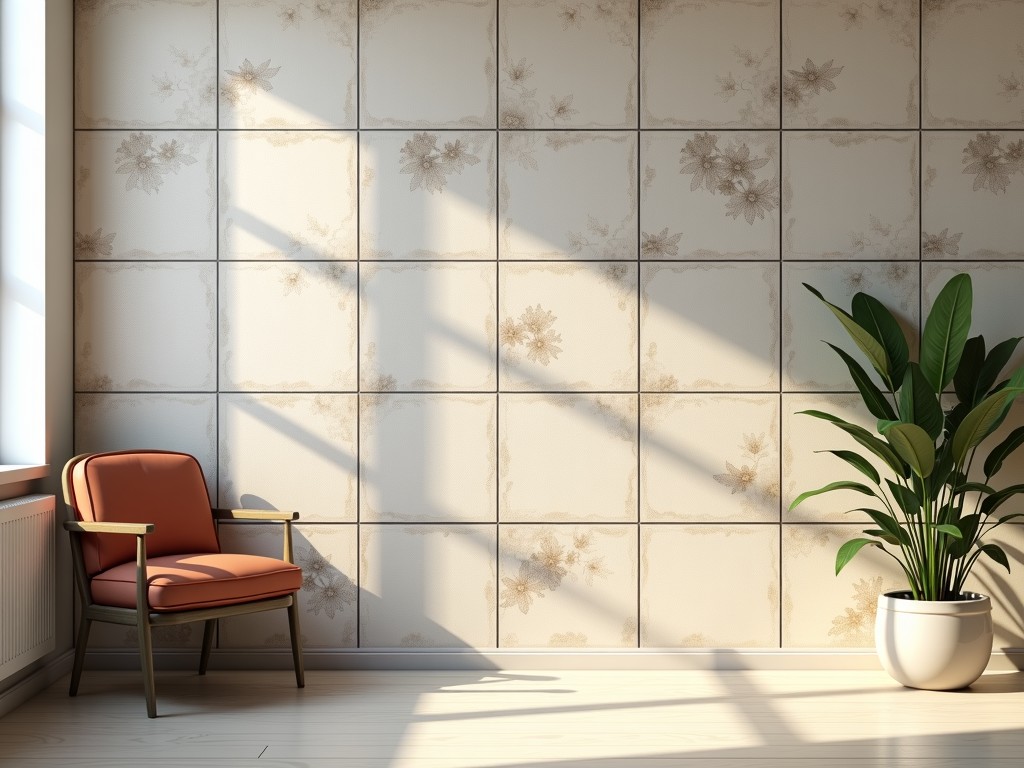
Decorative Wall Tiles for Industrial and Commercial Interiors
Decorative wall tiles are engineered surface materials designed to meet the durability, hygiene, and aesthetic demands of industrial facilities, commercial buildings, and institutional environments. Unlike residential finishes, these tiles must withstand frequent cleaning, chemical exposure, mechanical impact, and long-term service life while maintaining visual consistency across large installations.
Material Selection and Performance Characteristics
The base material determines how decorative wall tiles perform under specific environmental stresses.
Manufacturing Process and Dimensional Control
Production begins with precise batching of raw materials — clay, feldspar, silica, and fluxes — followed by wet grinding to achieve particle size distribution critical for green strength and firing uniformity. The slurry is spray-dried to optimal moisture content before pressing under high pressure (typically 300–400 MPa) into molds engineered to compensate for shrinkage. Tiles are dried in controlled humidity chambers to prevent warping, then fired in roller kilns at temperatures between 1180°C and 1250°C, depending on body composition. Post-firing, digital printing applies decorative patterns using ceramic inks that fuse with the glaze during a second, lower-temperature firing (700–800°C), ensuring abrasion resistance. Dimensional tolerances are maintained through calibrated pressing tools and laser-based sorting, with typical length and width variation held within ±0.5% and thickness within ±0.3mm for calibrated products.
Typical Specifications and Performance Data
| Property | Typical Range | Test Standard |
|---|---|---|
| Water Absorption | ≤0.5% (Porcelain), 0.5–3% (Stoneware) | ISO 10545-3 |
| Surface Abrasion Resistance | PEI Rating III–IV | ISO 10545-7 |
| Chemical Resistance | Class AA (Low Concentration), Class A (High Concentration) | ISO 10545-13 |
| Thermal Shock Resistance | Pass (10 cycles, ΔT=100°C) | ISO 10545-9 |
| Breaking Strength | ≥1300 N | ISO 10545-4 |
| Modulus of Rupture | ≥35 N/mm² | ISO 10545-4 |
Application Scenarios in Industrial and Commercial Settings
In food and beverage production areas, decorative wall tiles provide a non-porous surface that resists bacterial growth and withstands high-pressure washdowns with alkaline detergents. Their smooth, glazed finish prevents residue accumulation in joints when installed with epoxy grout, supporting compliance with HACCP and ISO 22000 standards. Pharmaceutical facilities benefit from tiles with seamless coved bases and chemical-resistant glazes, minimizing particle shedding and facilitating sterilization protocols. In transportation hubs such as airports and train stations, high-abrasion-resistant tiles maintain appearance despite constant foot traffic and luggage impact, while slip-resistant surface treatments (R10–R11) enhance safety in wet conditions. Educational institutions and healthcare centers specify tiles with sound-dampening underlayments and low-VOC adhesives to improve acoustic comfort and indoor air quality.
Customization Options and OEM Support
Manufacturers accommodate project-specific requirements through adjustable glaze formulations, digital printing resolution (up to 300 dpi), and modular sizing. Custom color matching is available using spectrophotometric analysis of client-provided samples, ensuring batch-to-batch consistency across large orders. Surface textures can be tailored from polished to matte or structured finishes to influence light reflection and slip resistance. Edge treatments — rectified, cushion edge, or beveled — are selected based on joint width preferences and grout type. For OEM clients, technical teams collaborate early in the design phase to validate tile performance against project-specific load, thermal, and chemical exposure profiles, adjusting body composition or glaze chemistry as needed.
Packaging, Logistics, and Installation Considerations
Tiles are packed in corrugated cardboard boxes with internal dividers and edge protectors to minimize corner damage during transit. Standard pallet configuration holds 40–60 m², depending on tile size and thickness, with stretch film and corner boards securing the load for export. Each box includes batch codes, size, and thickness markings for traceability during installation. For large-scale projects, just-in-time delivery sequencing can be arranged to reduce on-site storage needs. Installation requires substrates with flatness within ±3mm over 2m, verified using straightedges and feeler gauges. Thin-set mortars with polymer modification are recommended for areas subject to vibration or thermal movement, while epoxy adhesives are specified in chemical exposure zones. Grout joints are typically 2–3mm for rectified tiles, filled with flexible, stain-resistant compounds to accommodate minor substrate movement.
Quality Control and Supply Stability
Quality control begins with raw material testing for particle size, loss on ignition, and chemical composition. In-process monitoring includes pressing force verification, moisture content checks, and thermal imaging during firing to detect anomalies. Final inspection involves automated sorting for dimensional accuracy, surface defects, and color consistency, followed by manual audit of a statistical sample per batch. Manufacturers maintain buffer stocks of critical raw materials and diversify sourcing to mitigate supply chain disruptions. Production capacity is scaled through modular kiln lines, allowing adjustment of output based on order volume without compromising firing consistency. Lead times typically range from 4–8 weeks for standard products, extending to 10–12 weeks for fully customized orders requiring tooling or glaze development.
To discuss your project’s technical requirements, material selection, or customization options, share your drawings or specifications with our engineering team for a detailed evaluation and proposal.