Direct Factory High-Performance Kitchen Floor Tiles
Direct Factory High-Performance Kitchen Floor Tiles
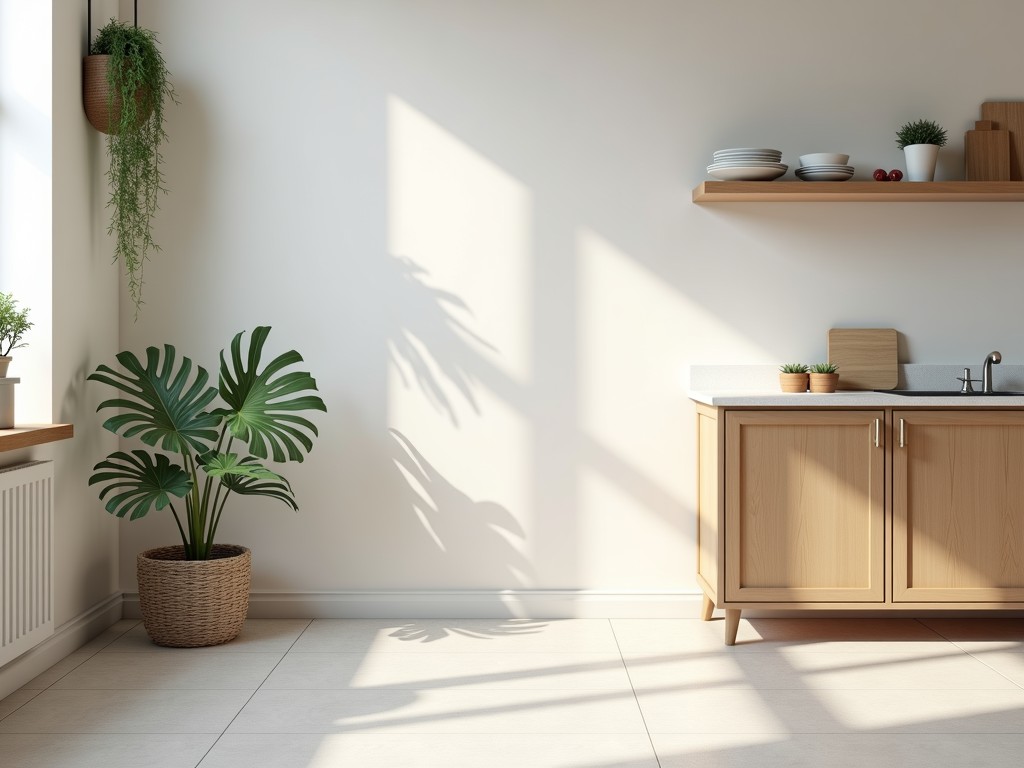
High-Performance Kitchen Flooring: Engineering Specifications for Commercial and Industrial Environments
Selecting surface materials for professional-grade kitchens requires a rigorous balance between mechanical durability, chemical resistance, and stringent food safety compliance. Unlike residential applications, industrial kitchen floor tiles must withstand constant thermal shock, heavy equipment loads, and frequent exposure to caustic cleaning agents without compromising structural integrity or hygiene standards. Our range focuses on high-density porcelain and technical ceramics engineered to maintain long-term performance in high-traffic culinary environments.
Material Selection and Structural Integrity
The primary failure point in standard flooring is often the water absorption rate. For high-moisture environments, we specify vitrified porcelain with a water absorption coefficient of below 0.5%. This non-porous structure prevents the ingress of lipids and organic matter, effectively eliminating bacterial growth reservoirs and preventing spalling caused by freeze-thaw cycles or moisture fluctuations.
PEI Rating: Rated 4 to 5 for heavy-duty abrasion resistance against rolling trolley carts and heavy-foot traffic.
Chemical Resistance: Inert to acids, fats, oils, and high-pH alkaline degreasers used in daily sanitation protocols.
Coefficient of Friction (COF): R10 to R12 ratings to ensure pedestrian safety even in wet or oily surface conditions.
Flexural Strength: High modulus of rupture to withstand impact loads from dropped stainless steel equipment or heavy cookware.
Technical Specification Overview
Precision in dimensional tolerance is critical for minimizing grout lines. Narrower joints reduce the surface area where organic contaminants can accumulate. Our tiles are manufactured with rectified edges to ensure a flat installation surface that allows for epoxy-based grout applications.
| Parameter | Standard Value | Industrial Benefit |
|---|---|---|
| Water Absorption | < 0.5% | Prevents staining and structural decay. |
| Surface Hardness | Mohs 6-8 | Resists surface scratching and abrasion. |
| Thickness Tolerance | ± 0.1mm | Ensures level flooring across spans. |
| Slip Resistance | Class R11 / R12 | Safety compliance in wet-zone operations. |
Installation and Maintenance Considerations
For large-scale installations, the substrate preparation is as vital as the tile itself. We recommend the use of polymer-modified thin-set and epoxy grout. Unlike standard cement grout, epoxy is non-porous and resistant to chemical penetration, ensuring that the joints do not become a liability or degrade under high-pressure washing.
Maintenance protocols are simplified by the non-absorbent nature of the porcelain surface. No sealing is required, reducing the long-term cost of ownership (TCO) for facility managers. The surface is compatible with industrial floor scrubbers and high-pressure steam-wash systems.
Application Scenarios
Our solutions are deployed across various zones within the culinary ecosystem, each tailored to specific environmental stressors:
Hot Kitchen & Prep Areas
Focus on thermal resistance and high-slip surfaces for areas with water and grease.
Cold Storage & Walk-ins
Engineered for low temperature stability to prevent cracking during contraction.
Frequently Asked Questions
Can these tiles handle heavy-duty refrigeration equipment?
Yes, provided the substrate is properly reinforced. The high flexural strength of our porcelain manages point loads from heavy industrial machinery without deformation.
Are the tiles compliant with international food safety standards?
Our materials are selected to meet global food-grade requirements, ensuring no chemical leaching and maximum resistance to microbial growth.
Request Technical Specifications & Quotation
Discuss your project drawings and material requirements with our engineering team for a customized proposal.
Contact Technical Sales