Exporter Marble Effect Porcelain Tiles
Exporter Marble Effect Porcelain Tiles
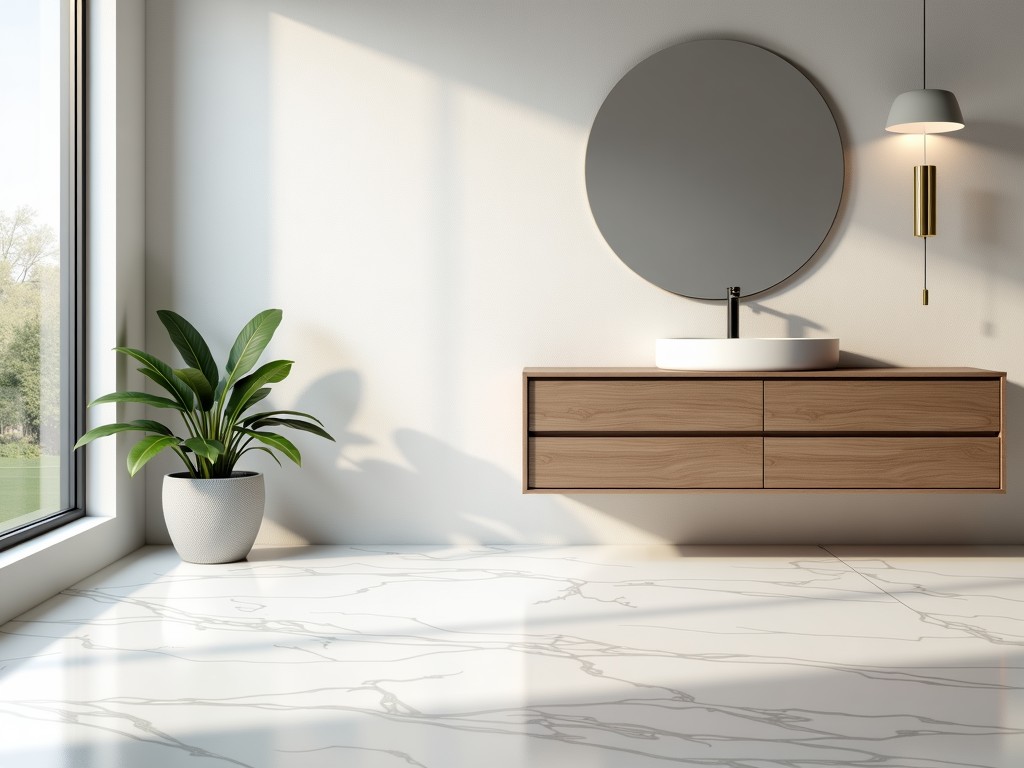
Technical Specifications and Performance Analysis of Marble Effect Porcelain Tiles
Selecting surfacing materials for high-traffic commercial environments requires a balance between the aesthetic requirements of natural stone and the rigorous performance demands of modern architecture. Unlike natural marble, which is prone to porosity, chemical etching, and structural inconsistency, marble effect porcelain tiles are engineered through high-pressure sintering processes. This results in a material that mimics the complex veining patterns of premium marble while maintaining the dimensional stability and mechanical resistance required for industrial-scale projects and high-end residential developments.
Engineering Composition and Manufacturing Process
The integrity of marble-effect porcelain lies in its mineral composition and the thermal cycle during manufacturing. Raw materials—typically clay, feldspar, and silica sand—are ground to a specific particle size, pressed, and then subjected to temperatures exceeding 1,200°C in roller kilns. This thermal densification process creates a vitrified body with a water absorption rate typically below 0.05%, making the tile virtually impervious to moisture and frost damage.
Modern production lines utilize high-definition digital inkjet printing to apply the visual patterns to the surface layer. This allows for the replication of specific geological formations found in Carrara, Calacatta, or Maruario marble without the structural weaknesses inherent in natural veining. For procurement teams, this translates to consistent quality across large batch orders, a factor nearly impossible to achieve with quarried natural stone.
Performance Metrics and Material Comparison
When evaluating tiles for technical specifications, engineers must look at mechanical properties beyond the visual appearance. The following table outlines the standard performance parameters for industrial-grade marble-effect porcelain tiles.
| Technical Property | Porcelain Specification | Natural Marble Comparison |
|---|---|---|
| Water Absorption (%) | < 0.05% | 0.1% - 5.0% |
| Modulus of Rupture | 35 - 45 N/mm | 10 - 30 N/mm |
| PEI Rating (Abrasion) | P4 - P5 (High Traffic) | Variable/Soft |
| Slip Resistance | R9 - R11 Available | Varies by finish |
| Chemical Resistance | High (Acid Resistant) | Low (Acid Etching) |
Application Scenarios in Demanding Environments
The versatility of marble-effect porcelain allows for deployment across diverse sectors where both aesthetic impact and durability are non-negotiable.
- Commercial Lobbies & Retail: High-traffic areas require the resistance to abrasion and easy cleaning to maintain a pristine appearance without frequent polishing cycles.
- Hospitality & Spas: Non-porous surfaces ensure hygiene standards by preventing the growth of mold and bacteria in high-humidity environments.
- Luxury Residential: Ideal for flooring and wall cladding where the seamless look of marble is desired without the maintenance-heavy sealing associated with natural stone.
- Outdoor Facades: Frost-resistant porcelain variants can be used in exterior applications exposed to temperature fluctuations without cracking or discoloration.
Quality Control and Logistics Standards
To ensure project success in large-scale installations, each batch undergoes rigorous testing protocols. This includes dimensional tolerance checks (typically within ±0.5mm for length and width), color shade consistency verification (Delta E values), and thermal-shock testing to ensure structural uniformity across the production run.
Logistics are managed through reinforced packaging. Tiles are palletized and shrink-wrapped with corner-edge protectors to prevent mechanical impact during international transit. For large projects, we provide comprehensive documentation including technical data sheets and compliance certificates required for meeting local building codes.
Frequently Asked Questions
Can marble-effect porcelain tiles be sealed?
No. Unlike natural marble, the vitrified surface of porcelain is non-absorbent, eliminating the need for periodic chemical sealing and significantly reducing long-term maintenance costs.
What is the difference between rectified and pressed?
Rectified tiles are precision-cut to ensure perfectly straight edges, allowing for narrower grout lines (as small as 1mm), which creates a more monolithic, stone-like appearance. Pressed tiles have slightly irregular edges and require wider grout joints.
Are these suitable for underfloor heating?
Yes, porcelain has high thermal conductivity, making it an efficient medium for transferring heat in radiant floor heating systems.
Discuss Your Project Requirements
Whether you are specifying for a commercial development or require a bulk material supply, our engineering team can provide the necessary technical data and samples to meet your project criteria.
Request Technical Consultation & Quotation