Extra Large Format Porcelain Tile Top Supplier
Extra Large Format Porcelain Tile Top Supplier
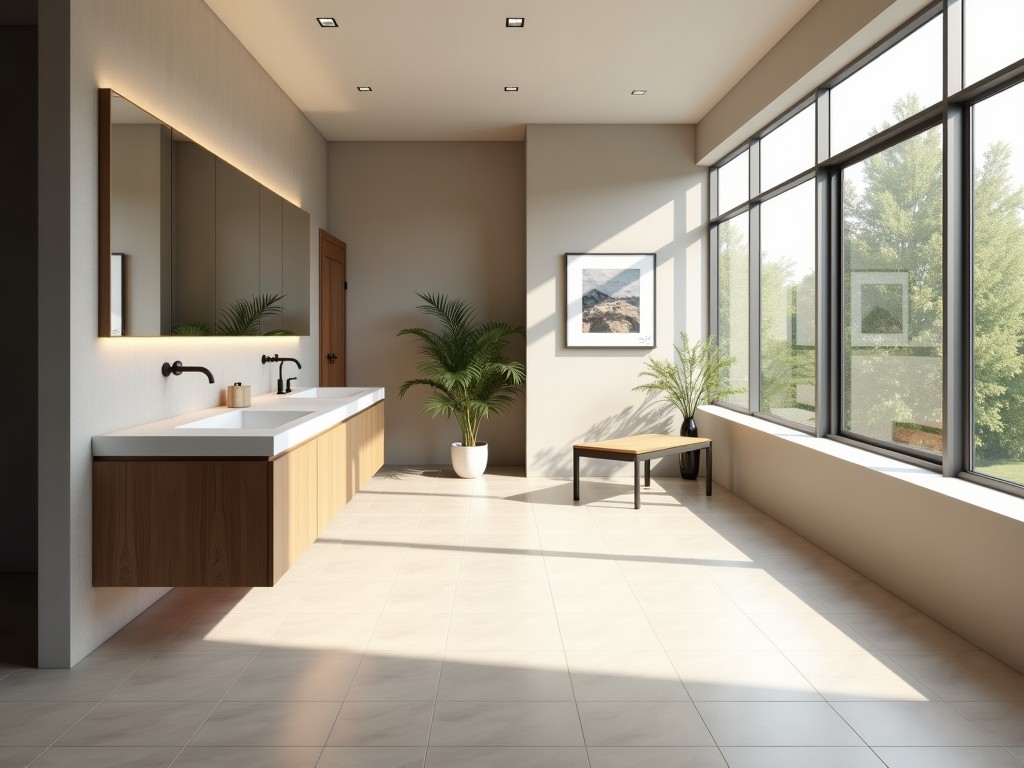
Extra Large Format Porcelain Tile: Engineering Specifications and Application Logic
Extra large format (ELF) porcelain tiles represent a significant shift in architectural cladding, moving beyond standard modular dimensions to large-scale monolithic solutions. Typically defined as tiles where one dimension exceeds 1200mm (48 inches), these slabs are engineered to minimize grout lines, thereby enhancing structural integrity and aesthetic continuity in large-scale environments. For procurement managers and engineers, the transition from standard format to XLF slabs requires a technical understanding of material density, substrate flatness requirements, and the mechanical properties of the vitrified body.
Material Composition and Manufacturing Process
Unlike standard ceramics, extra large format porcelain is manufactured through high-pressure hydraulic pressing. The raw material—typically a refined mixture of clay, feldspar, and silica—is subjected to pressures exceeding 40 bars before being fired in a kiln at temperatures above 1200°C. This process creates a material with water absorption rates of less than 0.5%, making it virtually impervious to chemical ingress, frost, and mechanical wear.
The dimensional stability of ELF slabs is maintained during the kilning process. Because the surface area is vast, uneven thermal expansion during cooling can lead to warping or bowing. Modern facilities utilize roller kilns with precision temperature zones to ensure the slab remains within tight tolerances, which is critical for "butt-joint" installations common in contemporary architecture.
Technical Performance Metrics for Industrial Selection
When specifying material for high-traffic commercial or industrial zones, engineering teams must look beyond visual appeal. The mechanical performance of porcelain slabs is determined by their load-bearing capacity, abrasion resistance (PE rating), and slip resistance.
| Parameter | Typical Value / Range | Engineering Significance |
|---|---|---|
| Water Absorption | < 0.5% | Resistance to frost and staining. |
| Modulus of Rupture | 35 - 45+ MPa | Load-bearing capacity for flooring |
| Thickness Tolerance | ± 0.2mm - 0.5mm | Critical for seamless joint alignment. |
| Surface Hardness | 6-7 (Mohs Scale) | Resistance to scratching and abrasion. |
Substrate Requirements and Installation Logic
The primary failure point in extra large format installations is not the material, but the substrate. Because slabs are rigid, they cannot compensate for irregularities in the subfloor or wall. A deviation of more than 2mm over 3 meters can result in stress concentration, leading to cracking under point loads.
- Substrate Flatness: Concrete slabs or backer boards must be perfectly leveled to ensure uniform mortar distribution.
- Adhesive Selection: High-performance polymer-modified thinset mortars are required to provide 100% coverage, preventing air pockets that compromise structural bond.
- Mechanical Support: Use of suction-cup lifting equipment is mandatory to prevent manual-induced fractures during placement.
Industrial and Commercial Scenarios
Large format porcelain is increasingly specified in sectors where hygiene and durability are non-negotiable.
In healthcare and high-traffic lobbies, the reduction of grout lines minimizes the accumulation of bacteria and simplifies maintenance protocols. In laboratory environments, the non-porous nature of the material ensures resistance to aggressive cleaning agents. For exterior facade cladding, ELF slabs offer a lightweight alternative to natural stone, reducing the dead load on the building structure while maintaining a premium aesthetic finish.
Logistics and Quality Control
Due to the dimensions and weight of ELF slabs, logistics are specialized. Slabs are typically shipped on reinforced wooden crates with specialized foam buffering to prevent edge-chi during transit. Quality control protocols include ultrasonic testing to detect internal voids and laser dimensional checks to ensure every piece meets the architectural project's tolerance requirements.
Request technical specifications or project consultation.
If you are specifying material for an upcoming large-scale commercial project, our engineering team can provide data sheets, load test results, and custom sizing options.
Contact Technical Support