Factory Direct Subway Wall Tiles in Industrial and Commercial
Factory Direct Subway Wall Tiles in Industrial and Commercial
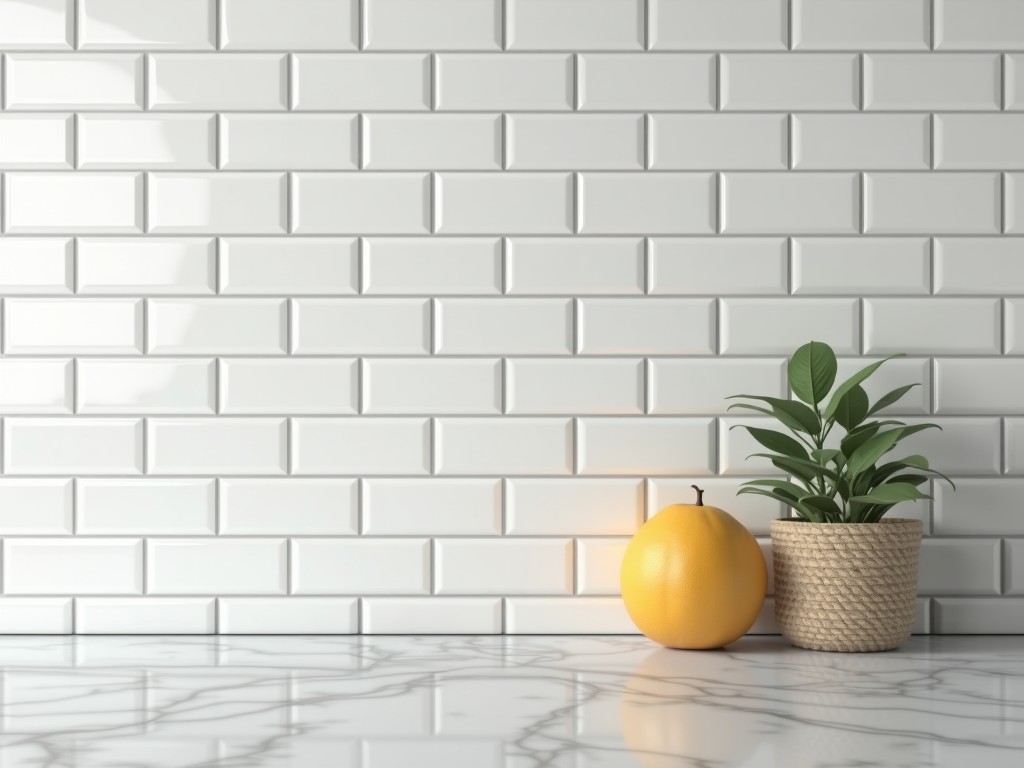
Technical Specifications and Application of Subway Tiles in Industrial and Commercial Environments
Subway tiles, historically known as metro tiles, serve as a critical cladding solution in environments where moisture resistance, chemical stability, and durability are paramount. While often associated with aesthetic design, the industrial utility of these tiles relies on their dimensional stability, low water absorption rates, and performance under rigorous mechanical stress. For procurement managers and engineers, selecting the correct subway tile involves evaluating the ceramic body composition, glaze hardness, and manufacturing tolerances to ensure the material withstands specific operational stressors in the facility.
Material Selection and Structural Integrity
The performance of a subway tile is primarily dictated by its manufacturing process. High-grade industrial tiles are typically vitrified, fired at temperatures exceeding 1,200°C. This process fuses the clay and minerals, resulting in a dense structure with minimal porosity. This lack of open pores is vital for preventing the growth of bacteria and the penetration of cleaning agents that could degrade less porous substrates.
Key Engineering Considerations
Water Absorption Rate: Standard industrial subway tiles target rates below 0.5%, ensuring freeze-thaw resistance and preventing moisture ingress.
PEI Abrasion Rating: Measures the surface's resistance to wear and scratching, critical for high-traffic corridors and food preparation areas.
Chemical Resistance: The glaze layer must be inert to acidic or alkaline cleaning agents used in industrial-grade sanitization protocols.
Dimensional Tolerance: Precision cutting ensures uniform grout lines, which prevents uneven stress distribution and reduces structural cracking during thermal expansion.
Technical Specification Table
In large-scale installations, consistency across batches is non-negotiable. The following table outlines the standard parameters for professional-grade ceramic subway tiles.
| Parameter | Standard Specification |
|---|---|
| Material Type | Vitrified Ceramic / Porcelain |
| Standard Dimensions | 75x150mm, 100x200mm, 150x300mm |
| Thickness | 6.0mm to 9.0mm ± |
| Modulus of Rupture | ≥ 35 N/mm² |
| Thermal Shock Resistance | Class 1 (3 cycles) |
| Light Fastness | Grade 6 (Excellent) |
Application Scenarios and Environmental Compatibility
The versatility of subway tiles allows for deployment across diverse sectors where hygiene and maintenance are the primary drivers. Unlike standard paints, which can peel under high humidity, the ceramic surface provides an impermeable barrier that protects the structural wall of the building.
Food Processing and Laboratories: In these zones, surfaces must withstand high-pressure washdowns and caustic chemical sanitizers. The non-porous nature of the glaze ensures that organic matter does not embed within the surface, maintaining food safety standards.
Healthcare Facilities: Resistance to mold and mildew growth is critical. The uniform format of subway tiles allows for precise joints which, when sealed with epoxy grout, eliminate breeding grounds for pathogens in clinical environments.
Customization and OEM Capabilities
For projects requiring specific architectural integration or corporate branding, we offer various customization paths. This includes custom color-matching via spectrophotometric analysis, bespoke sizing to meet specific facade dimensions, and specialized edge finishes.
We can accommodate OEM inquiries for specific surface textures—such as matte for anti-glare environments or high-gloss for maximum light reflectivity. Our production line utilizes automated climate-controlled kilns to ensure that color consistency is maintained across large volume orders, mitigating the risk of visual mismatch during installation.
Quality Control and Logistics
To ensure the integrity of the shipment during transit, we employ rigorous packaging protocols. Each batch is inspected for dimensional accuracy, surface defects, and tensile strength. Tiles are packed in reinforced pallets to prevent mechanical breakage.
Logistics planning is based on verified production capacity and shipping schedules. For international projects, we provide comprehensive documentation, including material safety data sheets and technical test reports to facilitate compliance with local building codes.
Need a Technical Consultation?
If you have specific project requirements or require a quote for a bulk installation, our engineering team is available to provide a detailed technical analysis.
Discuss Project Specifications and Request Quote