Factory Glazed Porcelain Tile For Fireplace Hearth
Factory Glazed Porcelain Tile For Fireplace Hearth
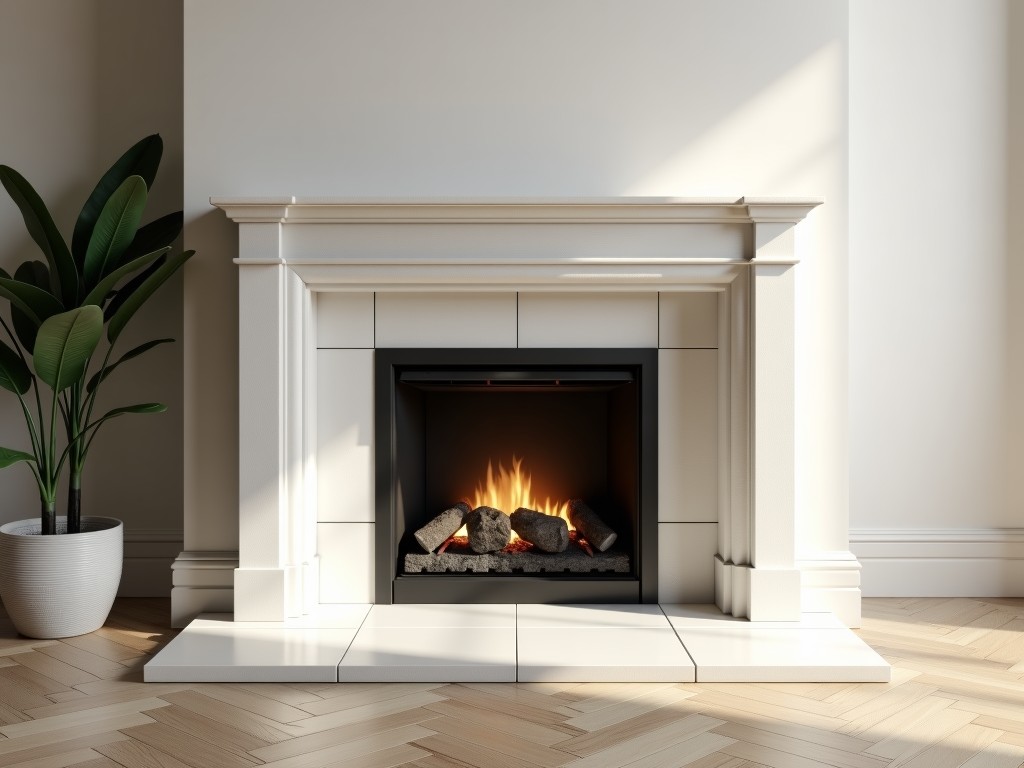
Technical Specifications: High-Performance Glazed Porcelain Tile for Fireplace Hearths
Selecting a material for a fireplace hearth requires a precise balance of thermal stability, mechanical durability, and chemical resistance. Our industrial glazed porcelain tiles are engineered to withstand the extreme temperature gradients inherent in heating environments while providing a structurally sound alternative to natural stone or unglazed ceramics.
Engineering Perspective on Thermal Resilience
Unlike standard ceramic tiles, industrial porcelain is fired at temperatures exceeding 1,200°C to 1,400°C. This process creates a vitrified body with a water absorption rate typically less than 0.5%. For hearth applications, this low density is critical; it prevents moisture ingress which can lead to spalling or structural cracking when the tile undergoes rapid heating and cooling cycles.
The glaze layer is not merely aesthetic. It serves as a protective barrier against carbon deposits and soot abrasion. Our manufacturing process ensures the glaze-to-body coefficient of thermal expansion is matched, minimizing the risk of delamination under the thermal stress of a gas or wood-burning fireplace.
Technical Performance Data
| Property | Typical Value / Standard |
|---|---|
| Water Absorption | < 0.5% (Vitrified) |
| PEI Rating (Abrasion Resistance) | IV - V (Heavy Commercial Grade) |
| Modulus of Rupture | ≥ 35 N/mm² |
| Thermal Shock Resistance | Class A (ISO 10545) |
| Thickness Tolerance | ± 0.1 mm |
| Surface Hardness | ≥ 6 (Mohs Scale) |
Material Selection for Demanding Applications
Procurement managers and design engineers must evaluate hearth materials based on the specific operating environment. While natural granite is traditional, glazed porcelain offers several advantages in modern architectural projects:
- Dimensional Stability: Precision-cut edges ensure minimal grout lines, reducing the surface area where soot and cleaning debris can accumulate.
- Chemical Inert: The non-porous glaze is impervious to acidic cleaning agents and ash residue, which can etch softer natural stones.
- Load Bearing Capacity: High compressive strength allows for hearth designs that incorporate heavy furniture or high-traffic transition zones without fracturing.
Manufacturing and Quality Control
Our production line utilizes a rigorous multi-stage process. It begins with the precise milling of clay and mineral fluxes, followed by high-pressure hydraulic pressing to eliminate internal voids. The tiles are then processed through continuous roller kilns to ensure uniform heat distribution.
Every batch undergoes ultrasonic testing to verify structural integrity and flatness. This is is vital for large-format hearth tiles where even a 1mm deviation can result in lippage during installation. We provide comprehensive documentation for custom dimensions and surface finishes to meet specific site-specific architectural requirements.
Installation and Maintenance Protocols
To ensure the longevity of the porcelain hearth, the following technical guidelines should be observed:
Expansion Joints: Always include flexible expansion joints at the perimeter of the hearth to allow for the thermal expansion of the substrate and the tile assembly.
Substrate Preparation: Use a high-performance polymer-modified mortar to ensure a bond that is resistant to thermal shifting.
Maintenance: Use neutral-pH cleaners. Avoid highly abrasive cleaners that could compromise the integrity of the glaze over long-term exposure.
Frequently Asked Questions
Can these tiles be used in direct contact with flames?
While porcelain has high heat resistance, it is designed for the hearth surface and surrounding floor area. We recommend consulting local fire codes regarding minimum clearances from the flamebox and the non-combustible hearth opening.
Are custom sizes available for large-scale projects?
Yes, we offer CNC waterjet cutting services for large-format slabs to achieve seamless hearth designs that minimize on-site waste.
What is the packaging standard for export?
Orders are packed in reinforced heat-treated wooden crates with internal polyethylene foam dividers to prevent edge chipping and breakage during international transit.