Factory Polished Porcelain Outdoor Tiles
Factory Polished Porcelain Outdoor Tiles
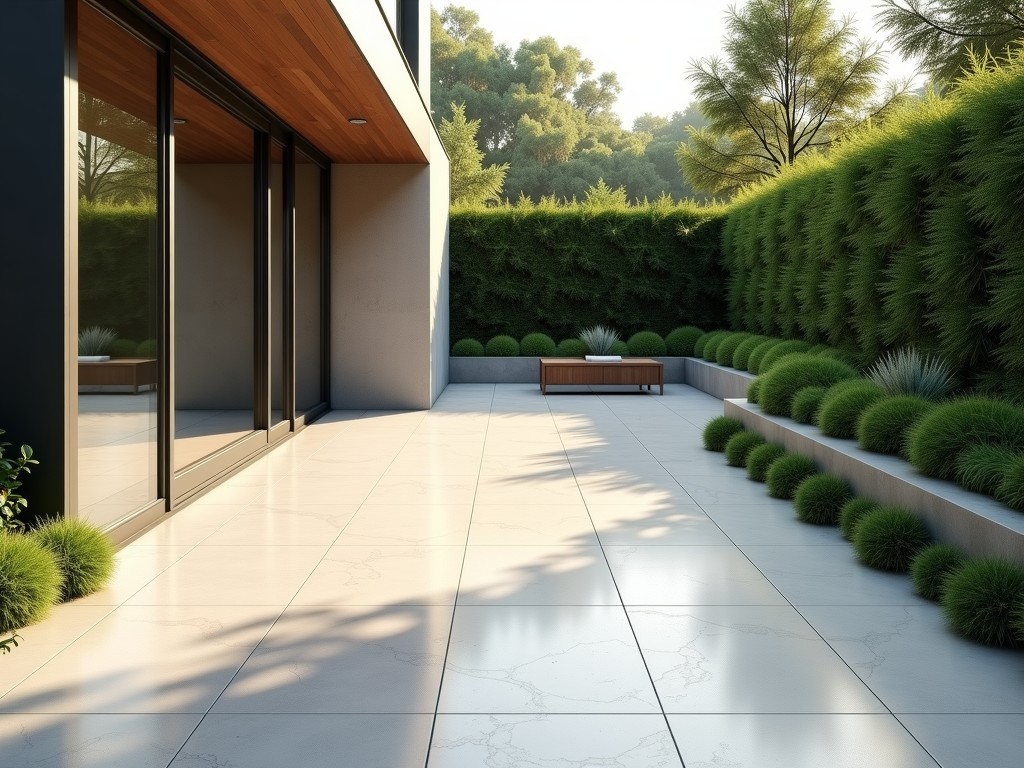
High-Performance Polished Porcelain Outdoor Tiles for Commercial Infrastructure
Selecting surface materials for exterior commercial environments requires a technical balance between aesthetic precision and rigorous mechanical performance. Unlike standard ceramic alternatives, industrial-grade polished outdoor tiles are engineered through high-pressure compaction and firing at temperatures exceeding 1,200°C. This process creates a vitrified, dense molecular structure capable of resisting thermal expansion, UV degradation, and the mechanical stresses common in high-traffic pedestrian zones and architectural terraces.
Engineering Specifications and Material Integrity
The durability of polished porcelain stems from its extremely low water absorption rate, typically measured below 0.05%. In outdoor applications, this is critical for preventing freeze-thaw damage, where moisture ingress followed by expansion would lead to surface spalling or structural delamination. The polished finish is achieved through precision diamond-grinding, ensuring a uniform surface plane that maintains its integrity over decades without fading under prolonged exposure to solar radiation or atmospheric pollutants.
Technical Performance Metrics
| Property | Standard Industrial Value |
|---|---|
| Water Absorption | < 0.05% |
| Modulus of Rupture (MOE) | ≥ 35 MPa |
| PEI Rating (Abrasion Resistance) | 4-5 (Heavy Traffic) |
| Surface Hardness | 6-7 Mohs Scale |
| Dimensional Tolerance | ± 0.5mm |
Application Logic for Outdoor Environments
Procurement teams and design engineers must distinguish between aesthetic requirements and functional safety standards. While polished porcelain offers a high-end reflective finish suitable for luxury hospitality terraces, the coefficient of friction (COF) must be carefully evaluated. For areas prone to rainfall, we recommend specific surface treatments or the integration of slip-resistant additives to ensure safety compliance while maintaining the structural benefits of the porcelain base.
- Chemical Resistance: The vitrified surface is non-porous, making it inert to salt spray, de-icing agents, and acidic cleaning solutions used in commercial maintenance.
- Thermal Stability: Low thermal expansion coefficients ensure that tiles do not buckle or crack during extreme temperature fluctuations between day and night cycles.
- Load Bearing: High compressive strength allows these tiles to support significant point loads from outdoor furniture and heavy foot traffic without structural deformation.
Installation and Logistics Considerations
Successful large-scale deployment depends on substrate preparation and precise installation techniques. Our porcelain tiles are manufactured with rectified edges to allow for minimal joint widths, which reduces water ingress through the grout lines. For international projects, we utilize reinforced wooden crates and heat-treated palletization to prevent edge chipping and surface abrasions during maritime or overland transit.
To ensure quality consistency across large production runs, we employ digital-format printing and automated laser inspection systems. This minimizes batch-to-batch variance, a critical factor for expansive architectural projects where visual uniformity is mandatory.
Technical Consultation & Procurement
Require technical data sheets, material samples, or customized dimensions for your specific outdoor project?
Request Specification & Quotation