Factory Sale Glazed Porcelain Pool Tile
Factory Sale Glazed Porcelain Pool Tile
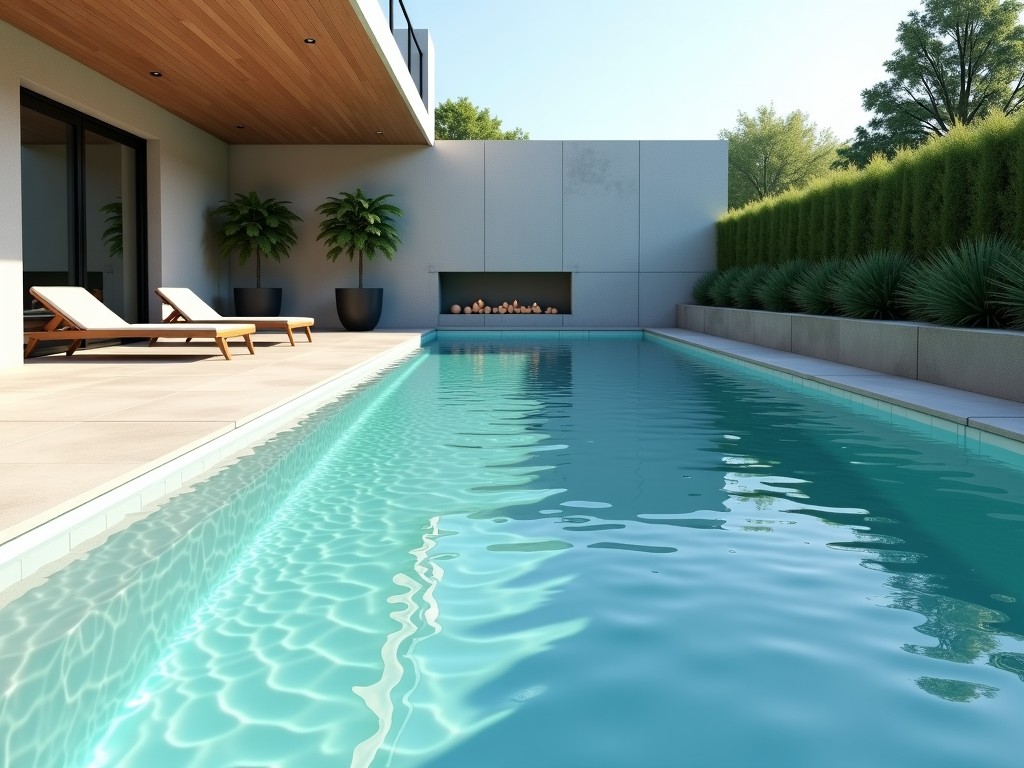
High-Performance Glazed Porcelain Pool Tile for Commercial Specifications
Selecting surfacing materials for aquatic environments like pools requires a balance between chemical resistance, structural integrity, and dimensional precision. Glazed porcelain pool tiles are engineered through high-temperature vitrification, resulting in a non-porous body capable of withstanding the oxidative environments and fluctuating pH levels typically found in modern water treatment systems.
Material Composition and Engineering Logic
Unlike standard ceramic tiles, porcelain-grade material is manufactured from a refined mixture of clay, feldspar, and silica fired at temperatures exceeding 1200°C. This thermal process creates a dense, glass-like structure with a water absorption rate typically below 0.5%. For pool applications, this low porosity is critical; it prevents internal pressure buildup and spalling caused by freeze-thaw cycles or mineral deposits within the substrate.
The glaze layer is not merely aesthetic. It serves as a sacrificial barrier against chlorine, bromine, and UV-induced degradation. High-quality glazes are chemically fused to the porcelain body, ensuring that the surface remains resistant to mechanical abrasion from pool equipment and foot traffic over long-term operational cycles.
Technical Specifications for Procurement Evaluation
Procurement teams and design engineers must evaluate specific metrics to ensure compliance with building codes and safety standards. The following table outlines standard benchmarks for industrial-grade glazed porcelain tiles.
| Parameter | Standard Value / Range |
|---|---|
| Water Absorption | < 0.5% |
| Modulus of Rupture (MOR) | ≥ 35 N/mm² |
| PEI Rating (Abrasion) | Class 4-5 (High Traffic) |
| Chemical Resistance | Class A (Acids/Alkalines) |
| Slip Resistance | R10 - R12 (Wet Surface) |
| Dimensional Tolerance | ± 0.5% per ISO standards |
Performance Advantages in Aquatic Environments
In large-scale aquatic projects, the failure of tile systems often stems from bond- or surface degradation. Glazed porcelain addresses these through several engineering advantages:
- Thermal Stability: The coefficient of thermal expansion is managed to prevent cracking during rapid temperature shifts between heated water and ambient air.
- Algae Inhibition: The non-reactive glazed surface limits the growth of organic biofilms, reducing the chemical load and labor required for maintenance.
- UV Resistance: High-fired mineral glazes do not fade or chalk under prolonged sunlight exposure, maintaining the design intent over decades.
- Structural Density: The high density of the porcelain body ensures the tile can withstand the hydrostatic pressure in deep end applications without structural failure.
Application Scenarios
These materials are specified for a variety of commercial and residential applications where durability is non-negotiable:
- Public Leisure Pools: High-traffic areas requiring heavy-duty abrasion resistance.
- Luxury Spas and Hotubs: Resistance to high-temperature water and concentrated chemical treatments.
- Water Features and Fountains: Environments where aesthetic consistency and mineral scale resistance are paramount.
- Hotel Pool Decks: Transition zones requiring slip-resistant surfaces that match interior finishes.
Customization and OEM Services
We understand that architectural visions often demand specific dimensions or color profiles. Our production facility supports customized specifications to integrate into project-specific design workflows.
From custom mosaic sheets for intricate waterline work to specific color-matching for branding, we provide technical support throughout the manufacturing process. Please discuss your project requirements and technical data sheets with our engineering team.
Quality Control and Logistics
To ensure site-wide consistency during installation, we enforce rigorous dimensional checks. Variations in tile thickness can lead to grout line cracking or uneven water levels. Our batch-testing protocol ensures that color tone and mechanical strength remain uniform across the entire order.
For international shipping, tiles are palletized using heat-treated wood with reinforced shrink-wrap packaging to prevent mechanical shock during transit, ensuring the material arrives on-site ready for immediate installation.