Glazed Porcelain Tiles 30X60Cm B2B Buy
Glazed Porcelain Tiles 30X60Cm B2B Buy
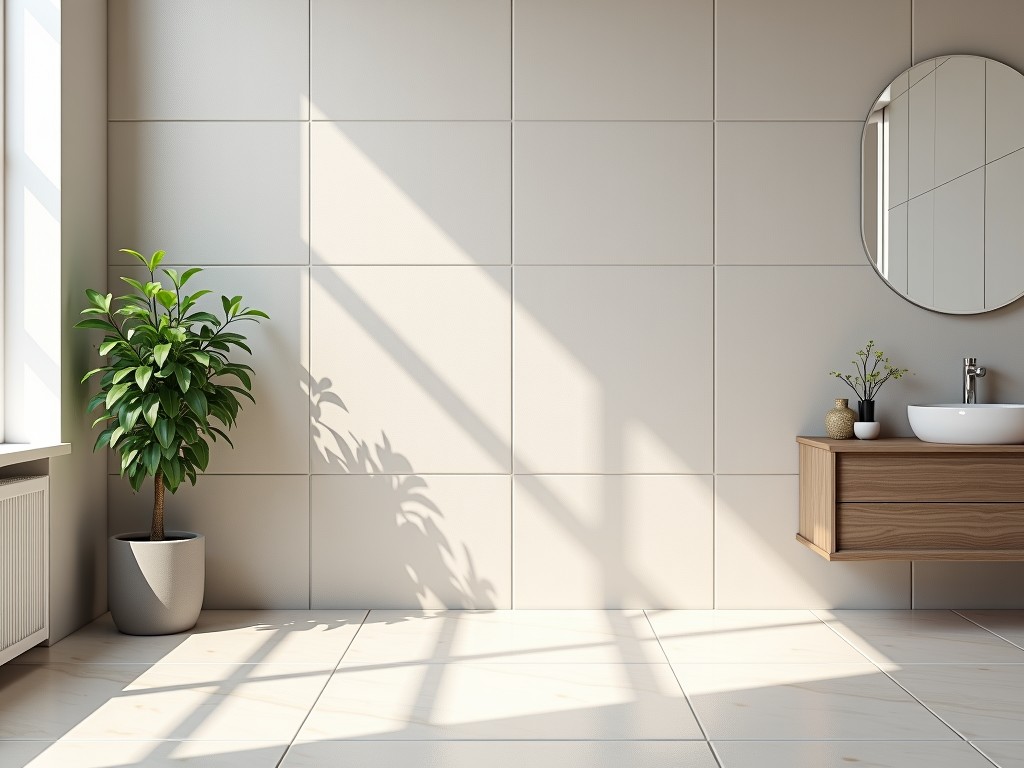
Technical Specifications and Application Analysis: Glazed Porcelain Tiles (30x60cm)
The 30x60cm glazed porcelain tile represents a balanced engineering solution for high-traffic environments where dimensional stability and aesthetic versatility are required. Unlike standard ceramic alternatives, these tiles are manufactured through high-pressure pressing and high-temperature firing, resulting in a dense body with low water absorption and high mechanical strength. This specific format is favored in commercial and industrial architectural projects for its ability to minimize grout lines while maintaining ease of installation on varied substrates.
Material Composition and Manufacturing Integrity
The performance of a 30x60cm porcelain tile is dictated by its material matrix. The body typically consists of refined clay, feldspar, and silica, which are vitrified at temperatures exceeding 1200°C. This process creates a nearly impermeable structure with a water absorption rate usually below 0.5%, ensuring resistance to frost heaving and chemical penetration. The glaze layer is applied as a liquid mineral coating, providing the primary defense against abrasion, UV staining, and surface-level wear.
From a procurement perspective, the 30x60cm dimension offers a strategic advantage in material yield and labor efficiency. The aspect ratio allows for offset laying patterns (such as running joints) which help mask minor structural deflections in subfloors, a common challenge in large-scale commercial installations.
Technical Performance Parameters
| Property | Typical Value / Range | Testing Standard |
|---|---|---|
| Water Absorption | ≤ 0.5% | ISO 13006 Group |
| Modulus of Rupture | ≥ 35 N/mm² | ISO 10545 |
| PEI Abrasion Rating | Class III to IV (Heavy Duty) | ISO 10545-7 |
| Slip Resistance | R9 - R11 (Available) | DIN 51134-10 |
| Thickness Tolerance | ±0 / +0.2mm | ISO 10545-3 |
Industrial Application Scenarios
The 30x60cm glazed porcelain is utilized across various sectors where hygiene and durability are critical metrics. Its geometry allows for rapid deployment in both vertical cladding and horizontal flooring.
- Healthcare & Laboratories: High resistance to chemical cleaning agents and ease of sterilization due to low grout density.
- Commercial Retail: High-traffic corridors and display areas where foot-traffic resistance and visual consistency are prioritized.
- Hospitality: Hotel lobbies and food preparation areas where the non-porous surface prevents biological growth and moisture ingress.
- Residential High-End: Kitchens and bathrooms requiring moisture-resistant surfaces that match modern architectural finishes.
Selection Criteria for Engineering Teams
When specifying 30x60cm tiles, engineers must distinguish between rectified and non-rectified edges. Rectified tiles are precision-cut after firing, allowing for ultra-narrow grout joints (1mm-2mm), which creates a more monolithic plane. Non-rectified tiles require wider joints to accommodate natural manufacturing variances, which may impact the aesthetic and maintenance requirements in sterile environments.
Furthermore, the surface finish—matte, satin, or polished—impacts the friction coefficient. Matte finishes provide higher slip for wet areas, whereas polished surfaces are reserved for dry-traffic interior zones where light reflectivity is desired.
Logistics and Quality Assurance
To ensure structural integrity during transit, units are palletized using industrial-grade heat-shrink wrapping and reinforced cardboard corner protectors. This prevents edge chipping and mechanical breakage. Our quality control protocol includes dimensional stability checks to ensure uniformity across the entire batch, minimizing alignment issues during large-scale installations.
For project-specific inquiries, load-bearing calculations, or bulk supply timelines, please contact our technical department to discuss your specifications.
Frequently Asked Questions
Can these 30x60cm tiles be used for outdoors?
Yes, provided the specific glaze has an appropriate slip resistance rating (R9 or higher) and the porcelain body is rated for frost-resistance.
What is the difference between glazed porcelain and vitrified?
Glazed porcelain features a decorative surface layer that provides color and surface wear resistance. Vitrified porcelain is color-through the entire body, making it ideal for applications where the surface might beget.
What are the standard lead times for bulk orders?
Lead times vary based on production volume and custom glaze requirements; please provide your project volume for an accurate estimate.
Can these 30x60cm tiles be used for outdoors?
Yes, provided the specific glaze has an appropriate slip resistance rating (R9 or higher) and the porcelain body is rated for frost-resistance.
What is the difference between glazed porcelain and vitrified?
Glazed porcelain features a decorative surface layer that provides color and surface wear resistance. Vitrified porcelain is color-through the entire body, making it ideal for applications where the surface might beget.
What are the standard lead times for bulk orders?
Lead times vary based on production volume and custom glaze requirements; please provide your project volume for an accurate estimate.