Hotel Porcelain Tiles Factory
Hotel Porcelain Tiles Factory
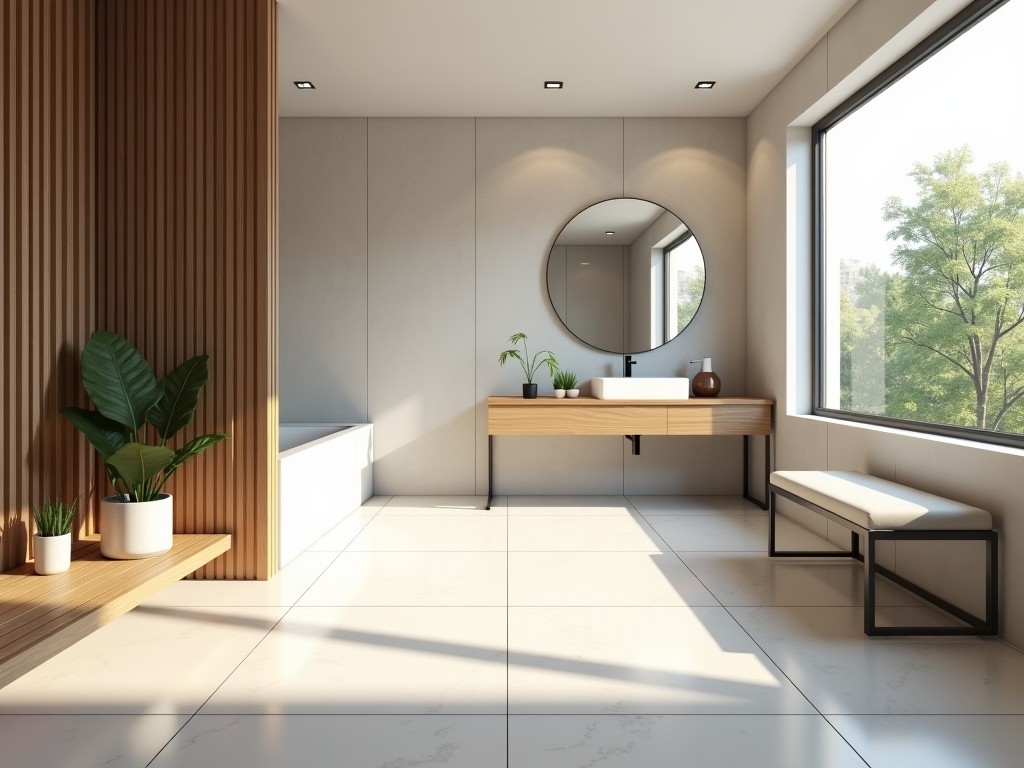
High-Performance Hotel Porcelain Tiles for High-Traffic Hospitality Infrastructure
Selecting the appropriate surfacing material for hospitality environments requires a balance between aesthetic versatility and the rigorous mechanical demands of high-occupancy. Unlike standard ceramic alternatives, hotel-grade porcelain tiles are engineered through high-pressure compaction and extreme-temperature firing, resulting in a near-zero water absorption rate. This density ensures structural integrity under heavy foot traffic in lobbies, corridors, and guest suites while maintaining resistance to harsh chemical cleaning agents.
Engineering Considerations for Hospitality Surfacing
From a technical perspective, the lifecycle of a hotel floor is dictated by its surface abrasion resistance and dimensional stability. In commercial settings, floors are subjected to mechanical stress from luggage carts, maintenance equipment, and rapid thermal-expansion cycles. Porcelain tiles utilize a vitrified body that offers superior hardness across the entire thickness of the material, meaning that surface wear does not expose a different color layer over years of operational use.
Procurement teams must also evaluate the Coefficient of Friction (COF) to ensure safety compliance in wet areas like pool decks or hotel bathrooms. Selecting a matte finish for corridors can mitigate slip hazards, while guest rooms may benefit from polished surfaces that enhance light perception and ease of maintenance.
Technical Specifications and Performance Standards
The following table outlines the typical performance parameters for industrial-grade porcelain tiles. Note that values may vary based on specific body compositions and surface treatment requirements.
| Property | Typical Value / Standard | Testing Method |
|---|---|---|
| Water Absorption | < 0.5% | ISO 10545-3 |
| Modulus of Rupture | > 35 MPa | ISO 10545-4 |
| PEI Rating (Abrasion) | Class 4 - 5 | ISO 10545-7 |
| Dimensional Tolerance | ± 0.5% | ISO 10545-2 |
| Chemical Resistance | Class A A (High Resistance) | ISO 10545-13 |
Application-Specific Material Selection
Different zones within a hotel facility present distinct mechanical challenges. A monolithic material approach is rarely optimal for cost-efficiency and maintenance frequency.
Lobbies and Corridors: Large format tiles are preferred to minimize grout lines, which reduces the entry points for dirt accumulation and simplifies mechanical cleaning in high-traffic zones.
Guest Rooms: Focus on thermal comfort and acoustic properties. Porcelain serves as an excellent thermal mass for underfloor heating systems, providing consistent temperatures across the floor area.
Bathrooms & Spas: High-slip-rated (R10 or R11) porcelain is essential to ensure safety in wet environments. Non-porous surfaces prevent mold growth and deep staining.
Commercial Kitchens/Service Areas: Heavy-duty porcelain is required to withstand thermal shock and impact loads from industrial kitchen equipment.
Manufacturing and Quality Assurance
The production process for hotel porcelain begins with the precise milling of raw minerals—clay, feldspar, and silica—into a fine slurry. This mixture is subjected to hydraulic pressures exceeding 400 bars to achieve maximum density. The subsequent firing process occurs at temperatures above 1200°C, triggering a chemical reaction that creates a glass-like crystalline structure.
To ensure consistency across large-scale projects, we employ automated digital rectification. This process grinds the edges of the tiles to precise dimensions, allowing for narrow grout joints (often 2mm or less), which creates a seamless appearance that is critical for modern architectural aesthetics.
Logistics and Project Integration
For large-scale hospitality developments, supply stability and packaging protection are paramount. Our logistics protocol involves reinforced palletization and moisture wrapping to prevent edge chipping during international or domestic transit. We provide detailed technical documentation to assist architects and engineers in specifying the material correctly within BIM models and construction plans.
Technical Consultation for Hospitality Specifications
Our engineering and technical teams are available to discuss material compatibility, load bearing capacities, and customization options for your specific project.
Request Technical Data Sheets & Quotation