Manufacturer Apartment Floor Porcelain Tiles
Manufacturer Apartment Floor Porcelain Tiles
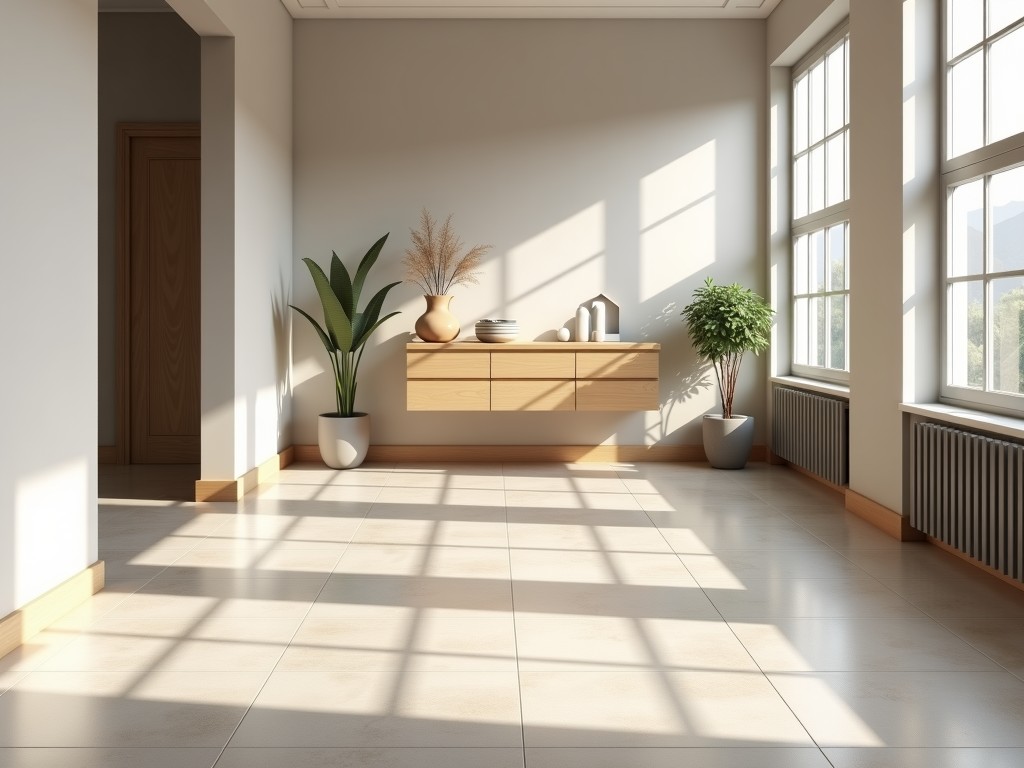
High-Performance Porcelain Floor Tiles for Residential and Apartment Infrastructure
Selecting flooring for modern multi-unit apartment developments requires a balance between aesthetic versatility and long-term structural durability. Unlike standard ceramic alternatives, porcelain floor tiles are engineered through high-pressure compression and extreme temperatures, resulting in a vitrified body with near-zero water absorption. This technical composition ensures the material can withstand high-traffic loads, mechanical impact, and the chemical stresses common in residential kitchens and bathrooms.
Engineering Characteristics and Material Composition
The performance profile of apartment-grade porcelain is dictated by its manufacturing process. The material is a refined mixture of clay, feldspar, and silica, which is fired at temperatures exceeding 1200°C. This thermal process creates a dense crystalline structure, yielding a material with a water absorption rate typically less than 0.5%. For procurement and engineers, this translates to superior resistance to staining, frost heaving, and dimensional stability across varying internal climates within a building.
In high-density residential environments, the surface hardness (Mohs scale) is critical. Porcelain tiles are rated for high abrasion resistance, meaning the finish intact over decades of use. Precision manufacturing allows for narrower grout lines, which reduces the risk of moisture ingress and simplifies the maintenance cycle for property managers.
Technical Specifications Overview
| Parameter | Typical Value / Range |
|---|---|
| Water Absorption | < 0.5% |
| PEI Rating (Abrasion Resistance) | PE3 - PE4 (Residential/Commercial) |
| Thickness Range | 6mm to 12mm |
| Dimensional Tolerance | ± 0.5% |
| Flexural Strength | > 35 MPa |
| Coefficient of Friction (COF) | R9 - R11 (Anti-slip options) |
Application Scenarios in Residential Construction
The application of porcelain tile depends on the specific zone within the apartment complex. We categorize these based on the environmental load and foot-flow patterns:
- Living Living and Dining Areas: Focus on large-format matte or satin finishes that provide aesthetic warmth while maintaining high ease of cleaning.
- Kitchens and Utility Zones: Priority on slip-resistant surfaces (R10/R11) and chemical resistance against potential spills and mechanical impact.
- Bathrooms and Wet Areas: Utilization of low-porosity porcelain to prevent mold growth and structural degradation in humid environments.
- Common Corridors and Lobbies: Heavy-duty PEI4 rated tiles to withstand continuous pedestrian traffic and maintenance equipment movement.
Selection Guide for Procurement Teams
When evaluating suppliers for large-scale apartment projects, technical buyers should look beyond visual aesthetics. Consider the rectification process; rectified edges allow for precision installation with minimal 1mm-2mm grout joints, which enhances the modern aesthetic and reduces labor costs associated with grout maintenance.
Critical Evaluation Factors
- Batch Consistency: Ensuring color tone and caliber matching across multiple production runs to prevent visual discrepancies in large floor plans.
- Thermal Stability: Verifying the thermal expansion coefficient to ensure no cracking occurs during seasonal temperature shifts.
- Logistics Protection: Assessing palletization standards and reinforced packaging to minimize breakage rates during long-haul transit.
Frequently Asked Questions
Is porcelain tile suitable for underfloor heating systems?
Yes, porcelain is highly effective for radiant floor heating due to its high thermal conductivity and density. It absorbs and distributes heat evenly across the floor surface without undergoing significant thermal stress.
What is the difference between rectified and non-rectified tiles?
Rectified tiles are cut after firing to ensure perfectly square 90-degree edges and precise dimensions. This allows for narrower grout lines. Non-rectified tiles have natural edges and require wider joints to account for minor variations in size.
Can custom dimensions be provided for specific developments?
Custom specifications regarding tile size and specific surface finishes can be accommodated based on project volume and minimum order quantities (MOQ).
Need technical data or a quote for your project?
Consult with our Engineering Team