Modern Terrazzo Tiles Factory
Modern Terrazzo Tiles Factory
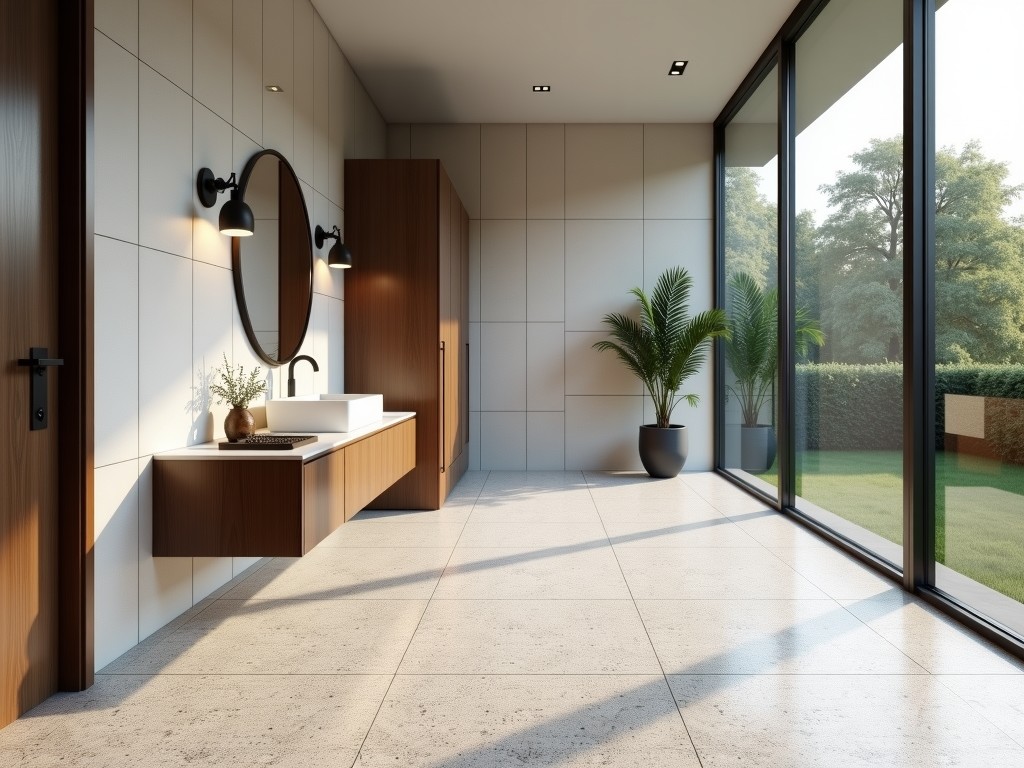
High-Performance Terrazzo Tiles for Commercial and Industrial Infrastructure
Modern terrazzo tile systems represent an evolution from traditional poured-in-place methods, offering precision-engineered flooring solutions. Unlike legacy installations, contemporary porcelain and cast-stone terrazzo provide superior dimensional consistency, controlled aggregate distribution, and rapid installation, making them ideal for demanding architectural specifications and high-traffic environments where structural durability is non-negotiable.
Engineering Perspective: Beyond Aesthetic Variety
From a structural standpoint, the primary challenge with traditional terrazzo is the risk of cracking due uneven shrinkage or inconsistent moisture content during the curing process. Modern terrazzo tiles utilize high-density pressing techniques or advanced polymer-cement binders to eliminate these variables. This results in a material with a high modulus of elasticity, capable of maintaining integrity under heavy point loads and rapid thermal fluctuations.
The performance of the tile is dictated by the aggregate-to-binder ratio. By utilizing precisely graded marble chips, glass cullet, or mineral aggregates, manufacturers ensure a surface hardness that resists abrasion according to the Mohs scale. For procurement teams, this translates to a lower lifecycle cost, as the surface requires minimal maintenance compared to standard epoxy or lower-grade ceramic.
Material Selection and Performance Matrix
| Technical Specification | Porcelain-Based Terrazzo | Cast-Stone Terrazzo |
|---|---|---|
| Water Absorption | < 0.5% | 0.5% - 3.0% |
| Abrasion Resistance | PEI Rating 5 (Heavy Duty) | High (Industrial Grade) |
| Dimensional Tolerance | ±0.1mm | ±0.5mm - ±1.0mm |
| Chemical Resistance | Excellent (Acid Resistant) | Good (Dependent on sealer) |
Application Scenarios in Industrial Environments
Selecting the correct tile variant requires understanding the specific load and environmental exposure of the installation site. Modern terrazzo tiles are engineered for various sectors where hygiene, de-slip resistance, and high-traffic durability are critical:
- Healthcare & Laboratories: Non-porous surfaces that withstand rigorous chemical sterilization and prevent microbial growth.
- Retail & Transit Hubs: High-aesthetic finish that can withstand millions of foot traffic cycles without surface degradation.
- Industrial Kitchens: Slip-resistant options with high resistance to oils and alkaline cleaning agents.
- Hospitality Lobbies: Superior thermal stability for use in conjunction with underfloor heating systems.
Customization and OEM Integration
To meet specific architectural requirements, we offer extensive customization regarding aggregate composition and matrix color. This allows designers to align flooring with corporate branding standards without compromising the mechanical properties of the material.
- Aggregate Sizing: Selection from fine (2mm) to large-format (20mm+) chips to achieve desired visual texture and de-slip level.
- Surface Finish: Options ranging from honed and matte to high-gloss polished, affecting the COF (Coefficient of Friction).
- Custom Thicknesses: Standard thicknesses from 6mm to 20mm to accommodate specific structural sub-floor requirements.
Technical Installation & Maintenance
The longevity of modern terrazzo tiles is heavily dependent on substrate preparation and adhesive selection. We recommend a rigid, moisture-stabilized substrate to prevent stress-induced cracking. Unlike poured-in methods, the tile format allows for phased installation, significantly reducing project timelines and minimizing downtime for active facilities.
Maintenance is simplified by the high-density nature of the material. Penetrating sealers are often recommended to protect the matrix from staining, ensuring that the visual integrity remains consistent over decades of operational use.
Frequently Asked Questions
Can modern terrazzo tiles be used with underfloor heating?
Yes, particularly porcelain-based terrazzo which has high thermal conductivity and low thermal expansion coefficients, provided a flexible thin-set adhesive is used to prevent delamination.
What is the typical lead time for custom aggregate orders?
Lead times vary based on the complexity of the mix and production volume. Generally, custom projects require 6 to 8 weeks from technical drawing approval to dispatch.