Non Slip Floor Tiles Supplier
Non Slip Floor Tiles Supplier
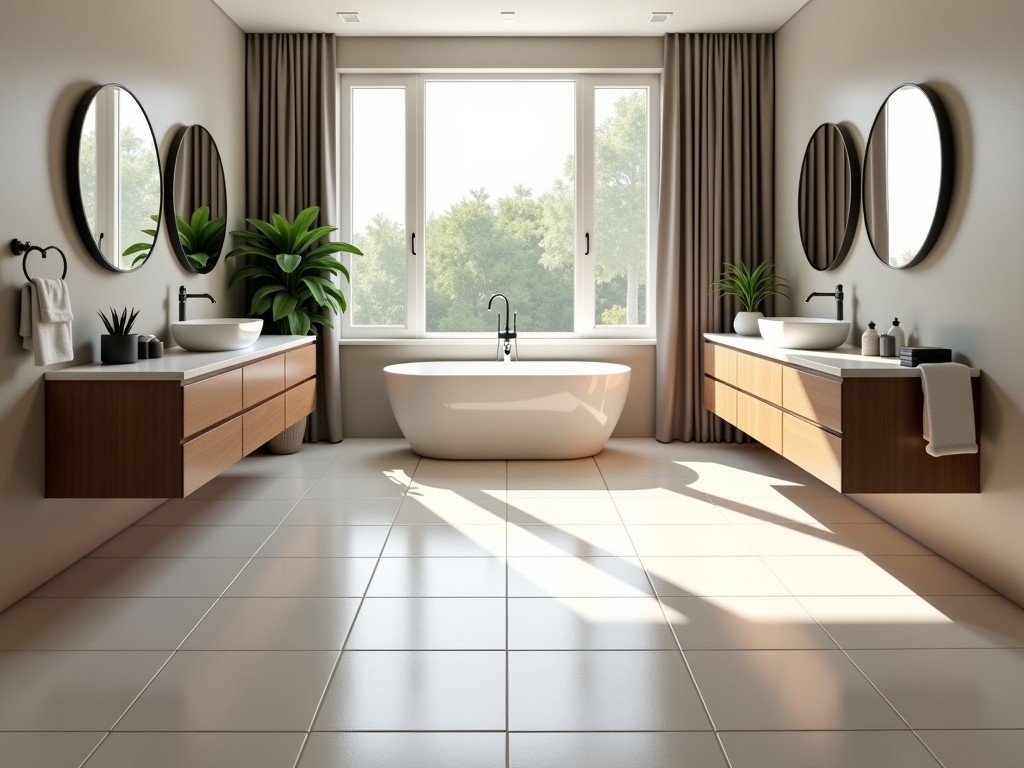
Industrial-Grade Non-Slip Floor Tiles for High-Performance Environments
In high-traffic industrial facilities, the flooring surface is a critical component that dictates both operational safety and maintenance efficiency. Selecting the correct non-slip floor tile requires a technical understanding of friction coefficients (COF), chemical resistance, and mechanical load capacity. Standard commercial tiles often fail under industrial oils or moisture exposure; we provide flooring solutions engineered to maintain consistent slip resistance even in adverse conditions, mitigating workplace risks without compromising the structural integrity of the substrate. >
Engineering Considerations for Slip Resistance
The efficacy of a non-slip surface is not merely determined by texture, but by the interaction between the material and environmental contaminants. Engineers evaluate tiles based on the Coefficient of Friction (COF) in both dry and wet states. In environments where lubricants, coolants, or water are present, a simple textured surface becomes ineffective as contaminants fill the microscopic pores. Our industrial tiles utilize high-relief profiles and aggregate-infused surfaces designed to break the liquid film, ensuring direct contact between footwear or wheels and the tile base.
Critical Metrics for Procurement Teams
- Dynamic Load Bearing: Ability to withstand forklift traffic and heavy machinery vibration without surface deformation.
- Chemical Inertness: Resistance to acids, bases, solvents, and industrial cleaning agents.
- Dimensional Stability: Low thermal expansion coefficients to prevent buckling or cracking in temperature fluctuating zones.
- Maintenance Cycle: Ease of removing deep-seated debris without degrading the abrasive surface.
Material Selection and Manufacturing Process
We utilize various material compositions depending on the specific application environment. High-density porcelain tiles are preferred for food processing where hygiene and thermal shock resistance are paramount. For zones requiring extreme impact resistance or electrical conductivity, reinforced epoxy or specialized polymer-based composite tiles are often specified. The manufacturing process involves high-pressure pressing to ensure the non-slip texture is not just a surface coating but is integrated throughout the body of the tile, preventing the grip from wearing away over time.
| Technical Specification | Standard Value | Application Focus |
|---|---|---|
| Slip Resistance Rating (Wet) | ≥ 0.6 COF | Kitchens, Labs |
| Water Absorption Rate | < 0.5% | Freeze-th resistance |
| Surface Hardness (PEI) | Class IV - V | High-traffic zones |
| Thickness Tolerance | &±0.5mm | Precision grout lines |
Industrial Application Scenarios
Flooring requirements vary significantly across the industrial landscape. In pharmaceutical manufacturing, the tiles must be non-porous to withstand aggressive chemical sterilization protocols. Conversely, in automotive assembly plants, the floor must endure the shear forces of rolling equipment and exposure to hydraulic oils. We provide customized surface patterns to ensure that the traction profile matches the specific traffic patterns of your facility layout.
Food & Beverage
Focus on antimicrobial properties, wash-down resistance, and high-grip performance in wet-processing areas.
Logistics & Warehouse
Engineered for heavy-duty impact and abrasion resistance from constant pallet jack movement.
Technical Laboratories
Chemical resistance to solvents and anti-static options for sensitive electronics assembly.
Quality Control and Supply Stability
To ensure consistency across large-scale projects, every production batch undergoes rigorous testing. This includes dimensional accuracy checks, tensile strength testing, and slip-coefficient verification under controlled environmental conditions. We understand that project delays are costly in construction; therefore, our production capacity is managed to provide stable lead times for both large-scale OEM orders and phased replacements.
Ready to specify your flooring?
Share your technical drawings or site requirements with our engineering team for a tailored proposal.
Request Technical Data Sheets & Quotation