Non Slip Outdoor Tiles B2B Supplier
Non Slip Outdoor Tiles B2B Supplier
High-Performance Non-Slip Outdoor Tiles for Industrial and Commercial Infrastructure
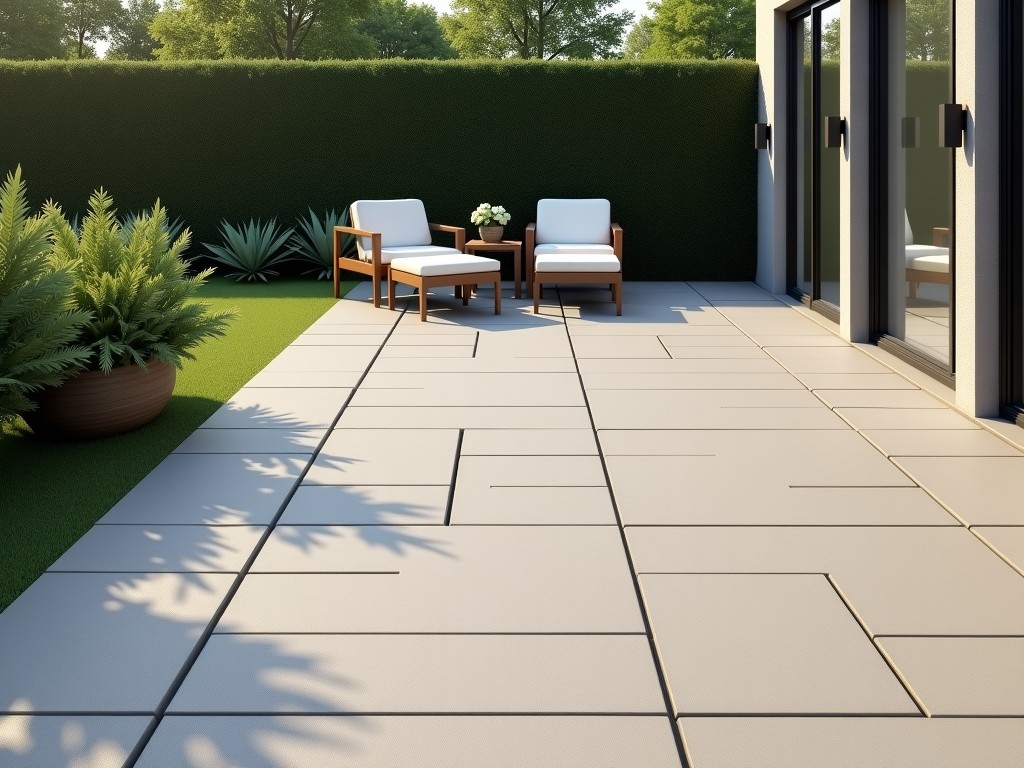
Selecting surfacing materials for outdoor environments requires a technical balance between pedestrian safety safety standards and long-term structural integrity. Non-slip outdoor tiles are engineered to maintain high friction coefficients under varying environmental conditions, including heavy rainfall, frost, or industrial oil spills. Unlike standard interior ceramics, these industrial-grade solutions focus on surface geometry and thermal expansion resistance to prevent delamination and mechanical failure in high-traffic transit zones.
Engineering Friction Resistance and Surface Geometry
The primary performance metric for non-slip tiles is the Coefficient of Friction (COF) and the Dynamic Pendulum Test (R-rating). For outdoor industrial applications, we typically specify an R11 to R13 rating to ensure safety when the surface is wet. This is achieved through specific manufacturing processes such as deep-pressure embossing, sandblasting, or the integration of abrasive aggregates into the body of the tile during the pressing phase.
The architecture of the surface determines how the tile manages water. Micro-textured surfaces allow water to escape from the contact point of footwear, reducing the hydroplaning effect that leads to slips on smooth-glazed surfaces. Engineers must evaluate the specific slope of ramps, loading docks, or public walkways to determine the appropriate grip depth and pattern.
Material Selection and Environmental Resilience
The choice of base material dictates the tile's lifespan under UV exposure and chemical exposure. Generally, three materials dominate the industrial outdoor sector:
- Full-Body Porcelain: Characterized by a water absorption rate of less than 0.5%. This makes them impervious to freeze-thaw cycles in cold climates where water entering pores would cause cracking.
- Reinforced Concrete: Often used in heavy-duty areas where vehicular traffic may be present. These offer high compressive strength but require sealing to prevent staining.
- Natural Stone (Granite/Slate): Utilized for architectural projects where aesthetic integration must meet technical standards for durability and slip resistance.
Technical Specifications for Procurement
| Property | Standard Industrial Grade | Heavy-Duty Grade |
|---|---|---|
| Water Absorption | < 0.5% | < 0.1% |
| PEI Abrasion Resistance | Class IV | Class V (Extreme) |
| Slip Resistance Rating | R11 - R12 | R13 |
| Compressive Strength | > 400 N/mm² | > 600 N/mm² |
| Thickness Range | 9mm - 20mm | 20mm - 40mm |
Application Scenarios and Installation Logic
Proper deployment of non-slip tiles depends on the substrate preparation and the expected load. For pedestrian walkways, a thin-set mortar application is standard, provided the substrate is stabilized.
- Commercial Plazas: Requires chemical-resistant surfaces to withstand salt and cleaning agents.
- Industrial Loading Docks: Requires thick-format tiles with high mechanical load-bearing capacities.
- Hospitality Pool Decks: Focuses on thermal-neutral surfaces and resistance to chlorine exposure.
Quality Control and Inspection Standards
To ensure project consistency, each batch undergoes dimensional tolerance testing (typically ±0.5% for length and width) and flatness checks. Flatness is critical in outdoor installations to prevent "lippage"—a trip hazard created when adjacent tiles are set at uneven heights.
Our testing protocol includes thermal shock resistance tests to ensure that the non-slip surface does not degrade under rapid transitions from direct sunlight to heavy cold rain.
Customization and OEM Services
For high-volume infrastructure projects, we offer customized sizing options. This includes specific edge profiles (rectified, chamfer, or bullnose) to accommodate specific drainage systems or architectural transitions. We can provide technical data sheets and material reports upon request for the project specification phase.
Request a Technical Consultation?
Share your project specifications, slip resistance requirements, and environmental conditions with our engineering team for a detailed material proposal and quotation.
Contact Technical Sales