Pool Coping Tiles Supplier
Pool Coping Tiles Supplier
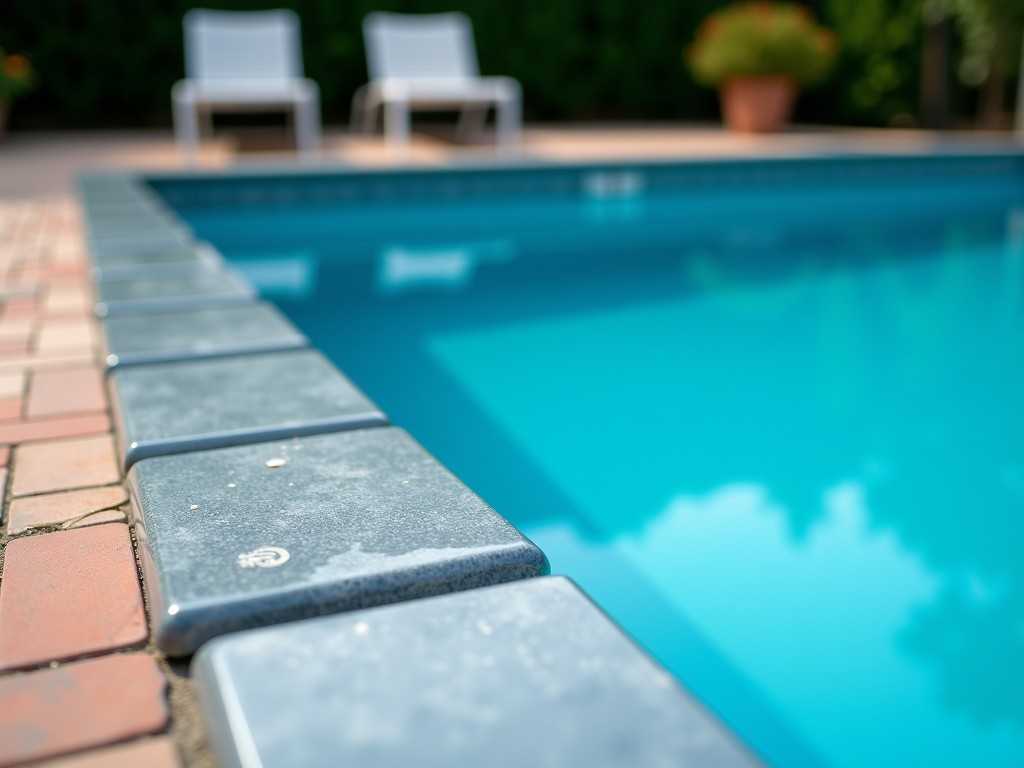
Engineering-Grade Pool Coping Tiles for Commercial and Residential Infrastructure
Pool coping serves as the critical transition point between the pool beam and the surrounding deck, performing multiple technical functions. Unlike standard wall tiles, coping units must withstand constant hydrostatic pressure, thermal expansion cycles, and chemical exposure while maintaining a safe interface for users. Selecting the correct material and edge profile is essential for preventing water infiltration into the bond-beam and ensuring the long-term structural integrity of the pool shell.
Material Selection and Structural Performance
The performance of pool coping is dictated by the material's water absorption rate and tensile strength. In large-scale projects, engineers typically evaluate between porcelain, natural stone, and reinforced cast concrete based on the specific environmental stressors and maintenance budgets.
Vitrified Porcelain: Offers a water absorption rate of
<0.5%, making="" it="" virtually="" resistant="" to="" frost-thaw="" cycles="" and="" chemical="" leaching="" from="" chlorine="" or="" salt="" systems.="">Natural Stone (Travertine/Granite): Provides high thermal mass and slip resistance. However, it requires periodic sealing to prevent mineral staining and degradation in high-acinity environments.
Reinforced Cast Concrete: Often used for custom geometries where site-specific molding is required, requiring precise reinforcement to prevent cracking under structural shifts.
Technical Specifications and Dimensional Tolerance
The profile of the coping tile is not merely aesthetic; it dictates safety and drainage efficiency. A standard bullnose (rounded) edge is the industry standard for minimizing injury risk, while square or chamfered edges are increasingly utilized in contemporary minimalist designs.
| Parameter | Standard Specification | Engineering Impact |
|---|---|---|
| Water Absorption | < 0.5% (Porcelain) | Prevents internal spalling and frost damage |
| Thickness Options | 30mm - 50mm | Provides structural mass for beam support |
| Dimensional Tolerance | ± 1.0mm | Ensures seamless grout lines and deck alignment |
| Coefficient of Friction | R11 - R12 (Wet) | Crucial for slip safety standards in wet zones |
Installation Logic and Moisture Management
The longevity of pool coping is often determined by the installation bond and drainage strategy. Coping must be installed with a slight outward pitch (typically 1-50 grade) to ensure that surface water is directed away from the pool structure, rather than pooling at the coping edge. This prevents efflorescence and reduces the degradation of the surrounding deck material.
For commercial applications, using polymer-modified thin-set mortars is recommended to accommodate the expansion and contraction of the pool structure. Joints should be properly sized at 3mm to 5mm and filled with high-performance flexible sealants rather than rigid grout, to prevent cracking caused by the different thermal expansion coefficients of the coping tile and the concrete pool wall.
Customization and OEM Capabilities
While standard bullnose profiles cover the majority of requirements, complex architectural projects often require bespoke solutions. Our manufacturing process allows for precision-cutting and edge-profiling to accommodate curved radius pools, as well as varying the width of the tile to match specific pool beam dimensions.
Custom radius cutting for organic or curvilinear pool geometries.
Specialized surface finishes (flamed, honed, or textured) for enhanced slip resistance.
Length-matched production for integrated architectural water features.
Quality Control and Logistics
To ensure consistency across large-scale developments, every batch undergoes rigorous testing for dimensional accuracy and color-tone stability. Packaging is engineered to prevent mechanical fractures during transit; tiles are secured in reinforced wooden crates with internal dividers to maintain edge integrity during international shipping.
Technical Inquiry & Procurement
If you require specific technical data sheets, material compatibility reports, or a quotation for a project project, our engineering team can provide the necessary documentation.
Request Technical Specifications & Quotation