Pool Mosaic Supplier
Pool Mosaic Supplier
High-Specification Pool Mosaic Solutions for Commercial and Residential Infrastructure
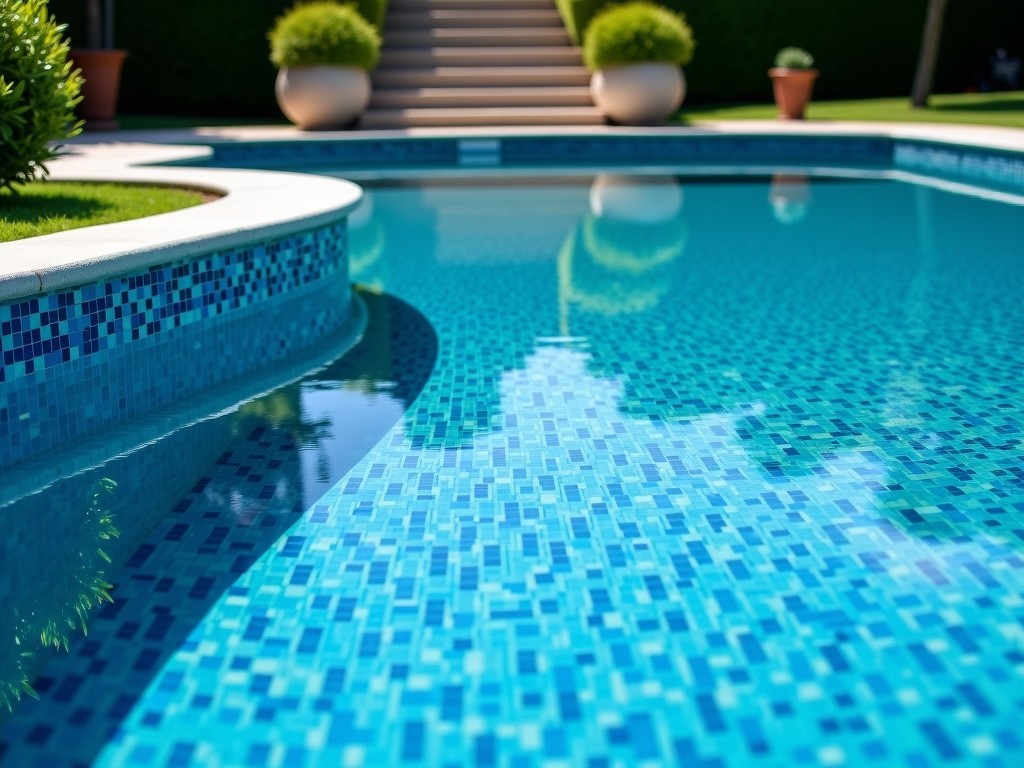
Selecting a pool mosaic supplier requires moving beyond aesthetic preference to a technical evaluation of material stability, chemical resistance, and structural integrity. Unlike standard interior tile, pool-grade mosaics must withstand constant hydrostatic pressure, aggressive chemical treatment from chlorine or saline, and significant thermal expansion/contraction cycles. Our manufacturing process focuses on providing dimensionally consistent units that ensure uniform grout lines and long-term adhesion in large-scale aquatic installations.
Material Selection for Submerged Environments
The primary failure mode in pool linings is delamination or cracking caused by poor material absorption or mismatched thermal coefficients. We categorize our offerings based on material profiles, each serving specific engineering requirements within the pool environment:
Glass Mosaics (Vitre)
Glass mosaics are non-porous, making them inherently resistant to algae growth and mineral scaling. We utilize high-clarity glass with UV-stabilized pigments to prevent fading under intense solar exposure. These are ideal for high-end commercial projects where water clarity and light refraction are prioritized.
- Zero water absorption rate (<0.1%).
- High resistance to pH fluctuations and high chlorine concentrations.
- Smooth surface finish reduces mechanical abrasion on pool surfaces.
Ceramic and Vitrified Mosaics
Fired at high temperatures, vitrified ceramics offer exceptional mechanical strength and frost resistance. These materials are often specified for high-traffic shallow areas or steps where slip resistance is critical. The manufacturing process ensures the body is dense enough to prevent spalling during freeze-thaw cycles.
Technical Specifications and Performance Standards
Procurement teams and engineers require precise data to ensure the mosaic matches the structural substrate. Inconsistency in sheet size can lead to uneven mortar application, which creates weak points in the finished pool shell.
| Parameter | Standard Value / Range | Engineering Significance |
|---|---|---|
| Water Absorption | < 0.5% | Prevents internal pressure buildup and salt crystallization. |
| Dimensional Tolerance | ± 0.5mm | Ensures flat installation and uniform grout joints. |
| Thickness Range | 6mm - 10mm | Determines material weight and adhesive bed depth. |
| Frost Resistance | Class 4/5 Compliant | Critical for outdoor pools in cold climates. |
Manufacturing and Quality Control
The longevity of a pool mosaic is often decided by the mesh backing and the adhesive bond. We utilize alkali-resistant fiberglass mesh that maintains structural tension during installation, ensuring sheets do not warp or curl when applied to curved gunites.
Our quality control protocol involves rigorous testing of every batch, including thermal shock testing and chemical leaching analysis. This mitigates the risk of color bleeding or structural deconstruction, which are costly issues to remediate once the pool is commissioned.
Customization and OEM Capabilities
For large-scale architectural developments or bespoke hospitality projects, standard catalogs are often insufficient. We provide comprehensive OEM and ODM services to meet specific design-:
- Custom Color Palettes: Precise color matching for brand-specific architectural scheme requirements.
- Custom Formats: Specialized tile sizes beyond the standard 25x25mm for unique geometries.
- Textured Surfaces: Engineering specific slip-resistance ratings (R values) for shallow safety zones.
Logistics and Export Protection
Fragile mosaic materials require specialized packaging to prevent breakage during international transit. Our shipments are packed in reinforced wooden crates or heat-treated pallets with moisture-barrier wrapping to ensure that the material arrives at the site in installation-ready condition, reducing onsite waste and project delays.
Ready to Specify Your Project
Share your technical drawings, material requirements, or project volume with our engineering team for a formal proposal.
Request Technical Data & QuotationFrequently Asked Questions
Can glass mosaics be used in salt-water pools?
Yes, glass is non-porous and highly resistant to the corrosive effects of salt, which can affect lower-quality ceramic or porous tiles.
What is the standard lead time for bulk orders?
Standard stock items typically ship within 2-3 weeks, while custom OEM production runs may require 6-8 weeks depending on material availability and tooling requirements.
Is the mesh backing compatible with epoxy mortars?
We use alkali-resistant fiberglass mesh specifically to ensure it does not degrade when exposed to the high pH of thin-set mortars.