Porcelain Tile Manufacturer
Porcelain Tile Manufacturer
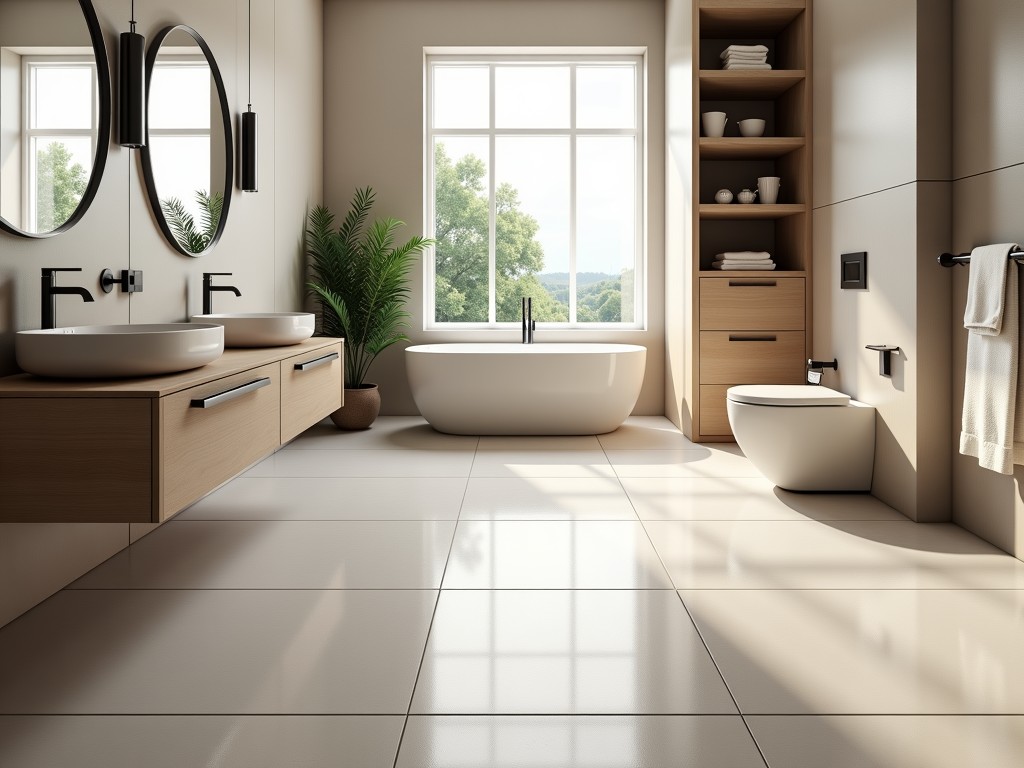
High-Performance Porcelain Tile Manufacturing for Industrial and Commercial Infrastructure
Selecting the right surfacing material for high-traffic or chemically environments requires a deep understanding of material density and mechanical resistance. Unlike standard ceramics, industrial-grade porcelain is manufactured through high-pressure vitrification processes, resulting in a material with near-zero water absorption and exceptional compressive strength. For procurement managers and engineers, the focus shifts from aesthetic appeal to long-term durability, chemical inertness, and dimensional stability under varying thermal loads.
Engineering the Vitrification Process
The performance of a porcelain tile is determined during the raw material stage. We utilize a precise blend of kaolin, feldspar, and silica, which is subjected to extreme hydraulic pressure. This compaction eliminates air pockets within the body before the tile ever enters the kiln. During the firing process, reaching temperatures exceeding 1,200°C, a chemical reaction occurs, fusing the particles into a glass-like matrix that is impervious to staining, abrasion, and mechanical impact.
This manufacturing rigor ensures a water absorption rate typically less than 0.5%. In industrial applications—such as laboratories, food processing, or logistics hubs—this density is critical to prevent the ingress of moisture, bacteria, or corrosive agents that could lead to structural spalling or hygiene failures.
Technical Specifications and Performance Metrics
| Property | Standard Value | Industrial Significance |
|---|---|---|
| Water Absorption | < 0.5% | Resistance to frost-thaw and chemical penetration. |
| PEI Rating | Class 4 - Class 5 | Suitability for heavy machinery and high foot traffic. |
| Modulus of Rupture | ≥ 35 MPa | Structural load-bearing capacity. |
| Coeff of Friction | R9 - R12 | Safety compliance for wet or oily industrial zones. |
| Dimensional Tolerance | &pm 0.1% | Ensures tight grout lines in large scale layouts. |
Application-Specific Material Selection
The choice of surface finish depends on the operational environment of the facility. We offer various surface treatments to address specific engineering challenges:
- Polished: Ideal for commercial lobbies and retail environments where light reflectivity and easy cleaning are prioritized.
- Matte/Lapp: Provides high resistance to scratches; suitable for offices and high-traffic corridors.
- Anti-Slip (R-Rated): Engineered textured surface for kitchens, pool decks, and outdoor walkways where water or grease presence is expected.
- Structured/Grip: Maximum friction for industrial ramps and exterior zones where safety compliance is critical.
Customization and OEM Capabilities
Large-scale infrastructure projects often require specific specifications that go beyond catalog offerings. Our manufacturing line supports custom sizing—including large-format slabs to minimize grout lines and potential points of failure—and bespoke digital printing to match architectural branding or technical requirements.
We work directly with design consultants and OEMs to provide thickness variations for specific load-bearing requirements or specialized edge profiles for integrated transition flooring systems. For project-specific inquiries, review our technical catalog.
Logistics and Quality Assurance Standards
To maintain integrity during international transit, our packaging protocol utilizes reinforced corrugated fiberboard boxes and palletized heat-treated wood crates, all shrink-wrapped to prevent edge chipping. Every batch undergoes a multi-stage inspection process checking for color consistency (Delta E) and dimensional accuracy.
Our quality control systems are aligned with international standards, ensuring that every tile delivered matches the approved sample, reducing the risk of site-waste during the installation phase.
Frequently Asked Questions
Can porcelain tile withstand the weight of heavy-duty forklifts?
Yes, provided the substrate is properly reinforced and the tile is installed with industrial-grade thin adhesive. The high density provides necessary flexural strength to prevent cracking.
What is the difference between ceramic and porcelain in technical terms?
Porcelain is fired at higher temperatures and contains less clay content, resulting in a much harder, denser material with lower water absorption compared to standard ceramic.
Are these tiles resistant to industrial chemicals?
The vitrified body is chemically inert, making it highly resistant to most acids, bases, and common cleaning agents used in industrial environments.
Can porcelain tile withstand the weight of heavy-duty forklifts?
Yes, provided the substrate is properly reinforced and the tile is installed with industrial-grade thin adhesive. The high density provides necessary flexural strength to prevent cracking.
What is the difference between ceramic and porcelain in technical terms?
Porcelain is fired at higher temperatures and contains less clay content, resulting in a much harder, denser material with lower water absorption compared to standard ceramic.
Are these tiles resistant to industrial chemicals?
The vitrified body is chemically inert, making it highly resistant to most acids, bases, and common cleaning agents used in industrial environments.
Ready to discuss technical specifications for your next project?
Request a Technical Consultation & Quotation