Supplier Colorful Terrazzo Tile
Supplier Colorful Terrazzo Tile
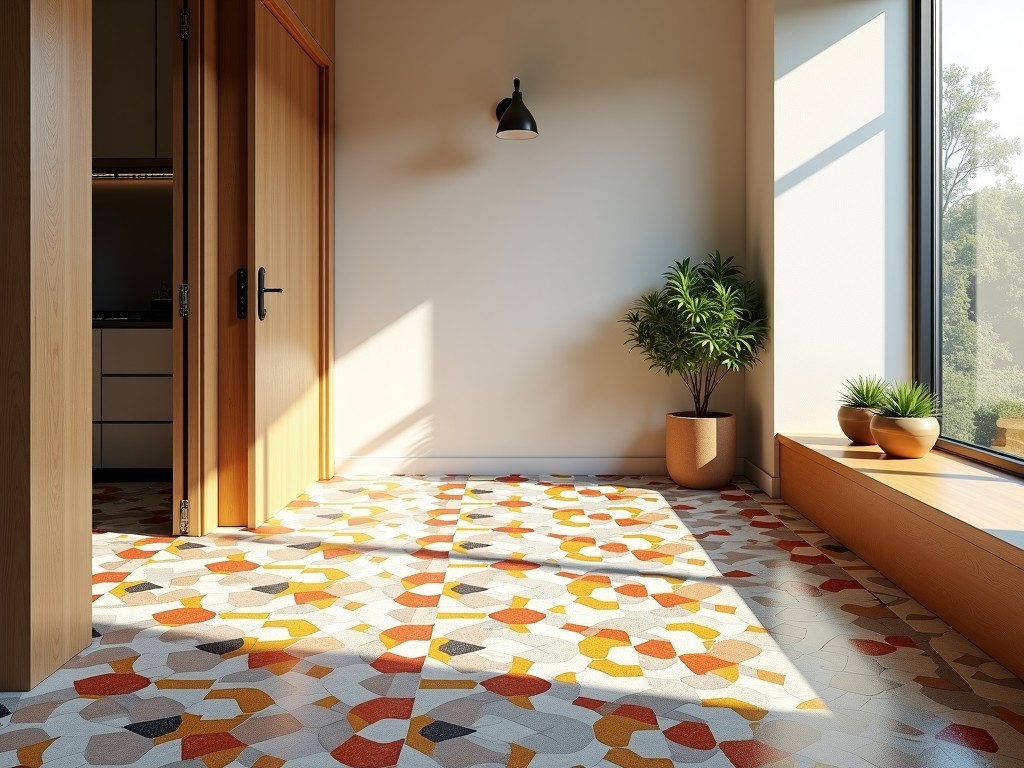
High-Performance Colorful Terrazzo Tile: Engineering Specifications and Application Guide
Colorful terrazzo tile represents an engineered flooring solution designed to balance structural durability with specific aesthetic requirements. Unlike standard ceramic or porcelain alternatives, industrial terrazzo is a composite material consisting of decorative aggregates—typically marble, quartz, granite, or recycled glass—embedded in a high-density cement or resin binder. This composition results in a monolithic surface capable of withstanding significant mechanical loads, making it a staple for high-traffic commercial environments where longevity and maintenance reduction are critical.
Material Composition and Structural Integrity
The performance of colorful terrazzo tile is dictated by the ratio of aggregate-to-binder material. In industrial-grade production, the aggregates are carefully selected for hardness and porosity to ensure the surface does not wear unevenly. The "colorful" aspect is not merely a surface treatment but is integrated into the material matrix through pigmented binders or the selection of vibrant stone chips.
- Cement-Based: Offers high thermal mass and fire resistance; ideal for outdoor transitions and industrial flooring.
- Resin-Based (Epoxy): Utilizes polyurethane or epoxy binders for zero moisture absorption, superior chemical resistance, and high-gloss color saturation.
- Aggregate Variety: Ranges from crushed marble for a classic finish to engineered glass and vibrant mineral chips for modern architectural specifications.
Technical Specifications for Procurement Evaluation
Procurement managers and design engineers must evaluate dimensional consistency and surface hardness to ensure project-fit. The following table outlines the standard performance parameters for premium-grade colorful terrazzo tiles.
| Property | Standard Specification | Performance Impact |
|---|---|---|
| Thickness Range | 10mm to 20mm (Customizable) | Determines load-bearing capacity and weight |
| Compressive Strength | ≥ 40 MPa (Cement-based) | Resistance to heavy equipment and traffic |
| Water Absorption | <0.5% (Resin-based) | Prevents staining and structural degradation |
| Dimensional Tolerance | ±0.5mm - 1.0mm | Ensures flush transitions and minimal grout lines |
Manufacturing and Surface Finishing Process
The manufacturing of colorful terrazzo tile is a multi-stage process that ensures material uniformity. Unlike tiles where the pattern is printed, terrazzo is ground down to reveal the internal aggregate. This process creates a depth of color that is consistent throughout the life of the tile.
Production begins with the precise mixing of aggregates and the binder. Once cast into molds, the tiles undergo a curing period necessary to reach full chemical strength. The critical stage is the grinding phase, where diamond-tipped machinery progressively removes the surface layer to expose the colorful chips. Following grinding, the surface is polished to achieve the desired finish—ranging from matte for slip-resistance to a high-gloss architectural finish.
Industrial Application Scenarios
Terrazzo tile is specified in environments where aesthetic identity must coexist with rigorous performance standards. Common applications include:
Commercial Retail
High-traffic mall floors where visual branding through color and ease of rapid cleaning are paramount.
Healthcare Facilities
Hospitals and labs requiring non-porous surfaces that withstand chemical sterilization.
Institutional Infrastructure
Universities and corporate headquarters seeking long-term durability over maintenance cycles.
Customization and OEM Services
To meet specific architectural requirements, we offer high levels of customization. Clients can specify the aggregate size (from fine 2mm chips to large 20mm mosaic pieces) and the binder color to match exact corporate color palettes.
For OEM partners, we can provide custom molds or integrated patterns directly into the tile production. Our technical team works with your project engineers to ensure that custom specifications remain consistent across large-scale installations.
Frequently Asked Questions
How is colorful terrazzo tile maintained over time?
Because the color is integral, it does not "wear off." Maintenance involves periodic sealing to prevent staining. It can be refinished and polished every few decades to restore its original luster.
Is it suitable for outdoor use?
Cement-based terrazzo is highly suitable for outdoor applications, provided it is treated with UV-resistant sealant. Resin-based variants are generally recommended for indoor use to prevent UV degradation.
Can the tiles be customized for specific dimensions?
Yes, we produce tiles in various sizes based on project requirements, though standard sizes offer faster lead times and cost-efficiency.
Require technical drawings or a formal quote for your project?
Request Technical Data & Quotation