Top Supplier Carrara White Porcelain Tile
Top Supplier Carrara White Porcelain Tile
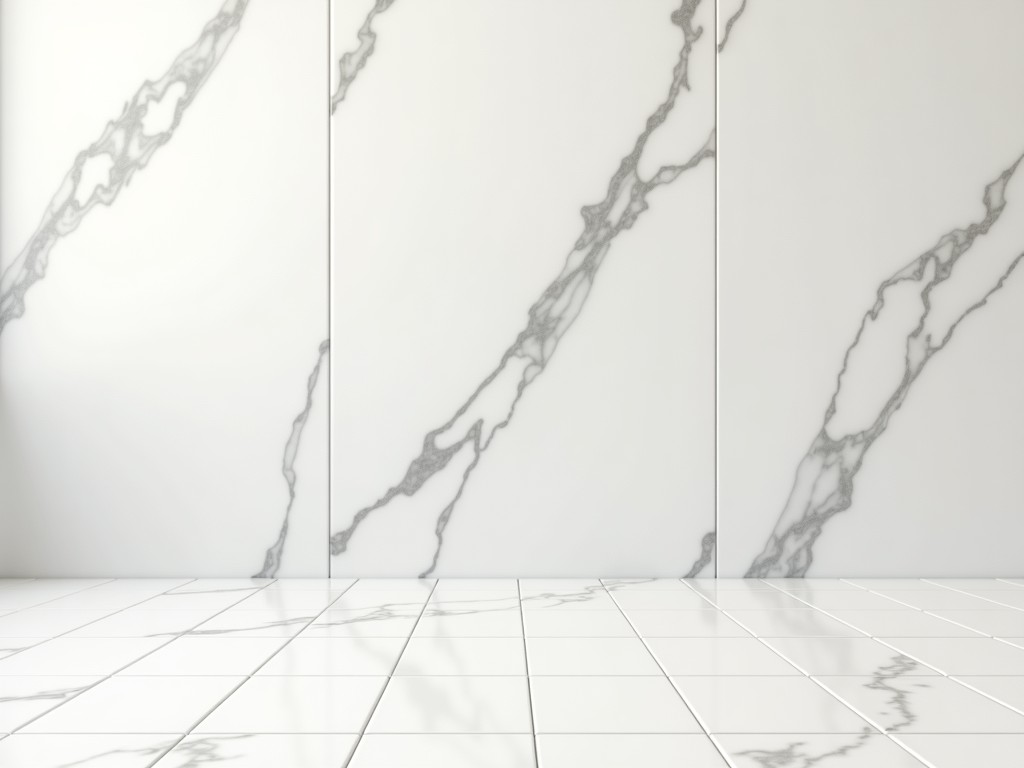
Carrara White Porcelain Tile: Technical Specifications and Material Analysis
In high-traffic architectural projects and commercial interior design, the selection of flooring material requires a balance between aesthetic intent and rigorous performance metrics. Carrara white porcelain tile offers an engineered alternative to natural marble, replicating the distinctive grey veining of Italian Carrara stone while providing the structural integrity of high-density ceramic. Unlike natural stone, these porcelain-grade tiles are manufactured through high-pressure pressing and extreme-temperature firing, resulting in a material with near-zero water absorption and superior abrasion resistance.
Material Composition and Manufacturing Process
The performance of Carrara white porcelain is derived from its mineral composition. While standard ceramic tiles utilize a clay-based body, porcelain is a mixture of feldspar, quartz, and clay fired at temperatures exceeding 1200°C. This process, known as vitrification, eliminates pores and creates a non-porous matrix. For procurement managers, this translates to a material that is resistant to chemical staining, frost, and mechanical wear—common failure points for untreated natural marble.
Engineering Performance Advantages
- Water Absorption: Typically < 0.5%, making it suitable for moisture-rich environments and commercial-grade kitchens.
- Abrasion Resistance (PEI Rating): Available in PEI 3 (residential) to PEI 5 (heavy commercial) ratings to match specific foot-traffic requirements.
- Dimensional Stability: Precision tolerances (±0.1mm) allow for minimal grout lines, enhancing the seamless visual effect.
- Surface Hardness: High Mohs scale rating prevents the scratching and etching often seen in softer natural stones.
Technical Specifications Table
Selecting the correct variant requires understanding the physical limits imposed by the installation environment. The following table outlines the standard parameters for our Carrara-style porcelain production.
| Property | Standard Value | Application Impact |
|---|---|---|
| Body Density | > 2400 g/cm³ | Structural load-bearing capacity |
| Thickness Range | 6mm to 20mm | Determines sub-floor prep andset height limits |
| Coeff of Friction | R9 to R11 (Available) | Safety compliance for wet vs. dry zones |
| Flexural Strength | > 35 Nmm | Resistance to impact-induced cracking |
Comparison: Porcelain vs. Natural Marble
Engineers often weigh the trade-off between the organic variability of natural stone and the predictable performance of porcelain. While natural marble offers unique geological formations, it is porous and requires periodic sealing to prevent acid-etch. Carrara white porcelain utilizes high-definition digital inkjet printing to replicate the veining patterns while ensuring the surface remains chemically inert and impermeable.
In large-scale commercial developments, the consistency of porcelain reduces the risk of color-matching issues between batches. Procurement teams can rely on batch testing to ensure visual uniformity across thousands of square meters of floor space.
Application Scenarios and Solutions
The versatility of this material allows for deployment across diverse industrial and architectural sectors, provided the correct finish is specified:
Hospitality & Retail
Polished finishes utilized for lobbies and high-end retail where light-reflectivity and resistance to heavy cleaning chemicals are required.
Healthcare Facilities
Matte or satin finishes provide necessary slip resistance (R-rating) while maintaining the hygiene standards required in clinical environments.
Luxury Residential
Large-format slabs (up to custom sizes) minimize grout lines, creating a monolithic aesthetic that mimics stone.
Quality Control and Logistics
To ensure supply stability and project integrity, every batch undergoes multi-stage inspection. This includes dimensional checks for flatness, shade deviation testing, and water-absorption verification. For international shipping, we utilize reinforced wooden palletization and moisture-shrink wrapping to prevent edge chipping during transit.
For projects requiring custom dimensions or high-volume OEM requirements, we provide technical data sheets and sample reports upon request. View full product catalog specifications.
Ready to specify your project?
Consult with our technical team regarding volume requirements, lead times, and customization options.
Request Technical Quotation