Wholesale Outdoor Wood Look Tiles
Wholesale Outdoor Wood Look Tiles
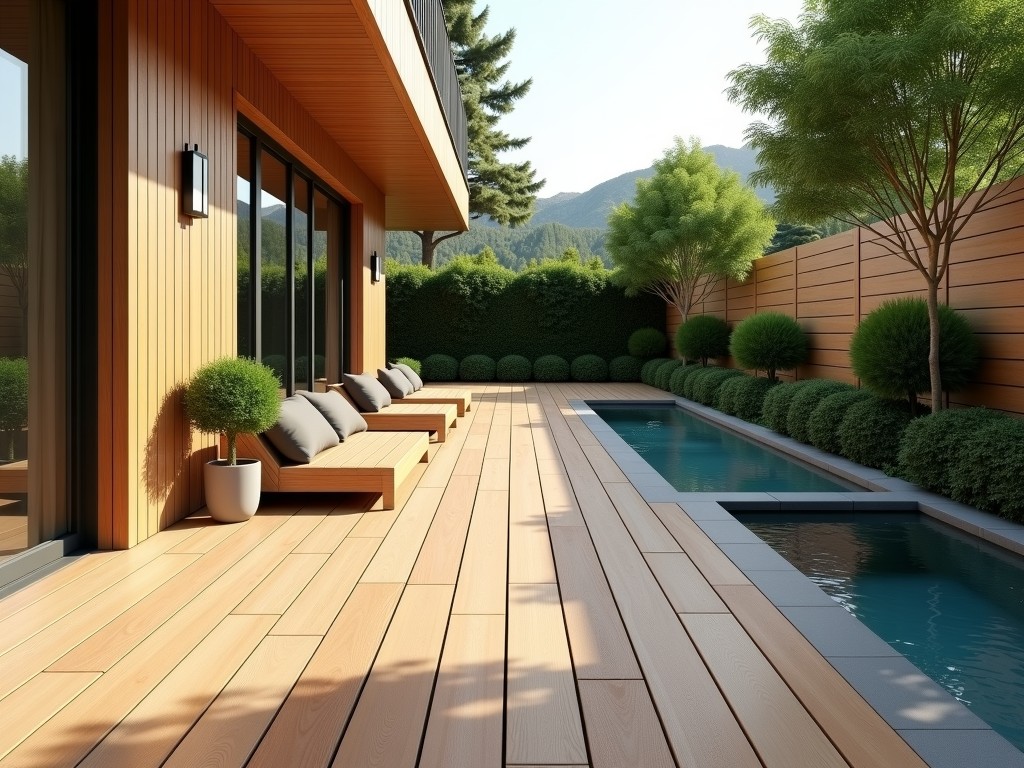
High-Performance Outdoor Wood Look Tiles for Commercial and Residential Infrastructure
In modern architecture, achieving the aesthetic of natural timber in exterior environments presents significant engineering challenges, including UV-induced degradation, moisture-related rot, and high maintenance cycles. Outdoor wood look tiles engineered from high-density porcelain offer the visual warmth and textural depth of wood while providing the structural stability and environmental resistance of advanced ceramics. These materials are designed for high-traffic pedestrian zones, pool decks, and commercial facades where durability and safety are non-negotiable specifications.
Engineering Limitations of Natural Timber in Outdoor Applications
Traditional wood decking requires periodic sealing, sanding, and replacement due to structural failure from biological growth. Even treated hardwoods are susceptible to thermal fluctuations, leading to warping and splintering. Porcelain-based wood look alternatives eliminate these variables through a high-temperature firing process—often exceeding 1,200°C—which results in a vitrified material that is dimensionally stable and impervious to salt spray, acids, and chemical cleaners.
From a procurement perspective, the lifecycle cost-benefit is found in the reduced Total Cost of Ownership (TCO). While the initial material cost may be higher than soft wood, the elimination of maintenance labor and the extended service life (often exceeding 25 years) make it the preferred choice for large-scale developments and public-facing infrastructure.
Technical Specifications and Performance Metrics
The performance of wood look tiles is dictated by their physical properties and surface geometry. Unlike indoor-grade ceramics, outdoor variants are engineered with water absorption rates of less than 0.5%, preventing frost-thaw cracking in sub-zero climates.
| Property | Typical Value / Range | Industrial Significance |
|---|---|---|
| Water Absorption | < 0.5% | Resistance to frost and internal staining. |
| Slip Resistance (R Value) | R11 - R13 | Safety in wet or sloped environments. |
| Mohs Hardness | 6 - 8 | Resistance to scratching and heavy foot traffic abrasion. |
| PEI Rating | Class 4 - Class 5 | Durability in high-volume commercial zones. |
| Thickness Options | 9mm, 20mm (Full Body) | 20mm ideal for pedestal-supported systems. |
Surface Engineering and Manufacturing Precision
To replicate wood, we utilize high-definition digital inkjet printing technology. This allows for the transfer of complex grain patterns, knots, and color variations that avoid repetitive patterns. However, the tactile experience is achieved through a 3D-pressing process that replicates the physical irregularities of real timber. This "sync-texture" is not merely aesthetic; it increases the surface area to enhance the slip resistance coefficient when the tile is wet.
Dimensional consistency is critical for modular installation. Our tiles are rectified to ensure precise edge tolerances, typically within ±0.5mm. This allows for narrow grout lines (2mm-3mm), which creates a seamless appearance that mimics tight wood plank installations while maintaining a unified structural membrane.
Strategic Application Scenarios
- Hospitality & Pool Decks: Utilizing 20mm full-body tiles on pedestal systems for rapid drainage and rapid leveling over uneven existing substates.
- Public Plazas: High-PEI-rated surfaces that withstand heavy pedestrian loads and mechanical cleaning equipment without showing surface wear.
- Commercial Facades: Lightweight cladding options that provide wood-look without the fire risk associated with natural timber siding.
Installation and Substrate Considerations
Selecting the correct installation method is as vital as the material itself. For outdoor projects, we recommend the use of flexible adhesive mortars or pedestal systems to allow for thermal expansion and contraction of the substrate without cracking the ceramic. For traditional thin-set applications, a perfectly flat, stable concrete slab is required to prevent hollow spots that could lead to mechanical failure.
For detailed project-specific specifications, bulk volume inquiries, or technical data sheets, please contact our technical team.
Frequently Asked Technical Questions
Can these tiles be used in wet pool surrounds?
Yes, provided the tile meets a slip resistance rating of R11 or higher. The porcelain is chemically inert to chlorine and salt-based cleaners.
What is the difference between 9mm and 20mm thickness?
9mm tiles are standard for bonded thin-set. 20mm tiles are "full-body," designed specifically for outdoor decking systems or areas where high mechanical impact is expected.
How does the color hold under intense UV exposure?
The pigments are integrated during the ceramic firing process at high temperatures, making them completely resistant to UV fading, unlike stained or painted wood.